





News Analysis: Pakistan’s Indus Waters Treaty campaign
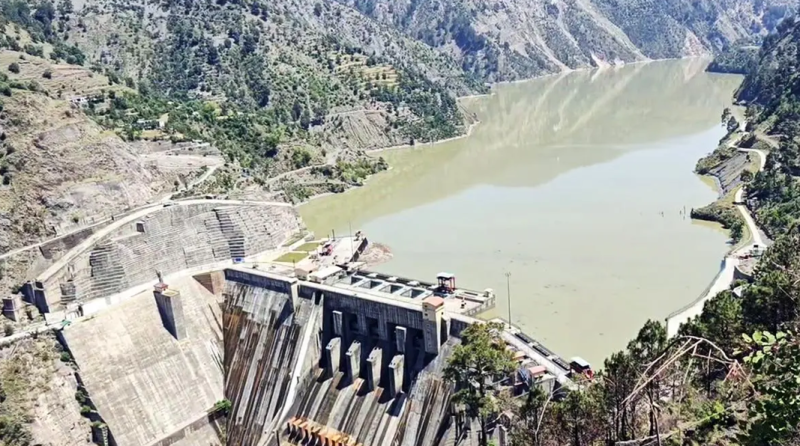
ISLAMABAD: Pakistan has intensified its diplomatic, legal and public outreach campaign to defend the Indus Waters Treaty (IWT), with top government officials, water experts and international scholars reaffirming the landmark agreement remains legally binding and warning that any unilateral attempt to undermine it would threaten regional peace, international law and the livelihoods of millions of people.
The renewed focus on the treaty comes amid Pakistan’s sustained efforts to keep the issue at the forefront of international diplomacy following India’s announcement in April 2025 that it was placing the 1960 agreement “in abeyance” – a move Islamabad has consistently rejected as illegal and without any basis in the treaty or international law.
Brokered by the World Bank in 1960, the Indus Waters Treaty is regarded as one of the world’s most enduring water-sharing agreements. It governs the distribution of the waters of the six-river Indus basin between Pakistan and India, allocating the three eastern rivers, Ravi, Beas and Sutlej, to India while granting Pakistan rights over the three western rivers, Indus, Jhelum and Chenab. Although India is permitted limited use of the western rivers under clearly defined provisions, Pakistan retains the primary rights over their waters.
Pakistani officials maintain that any disruption to the natural flow of the western rivers would pose a direct threat to the country’s agriculture, food security, hydropower generation and the livelihoods of millions of people who depend on the Indus basin.
They also argue that any attempt to weaken or disregard the treaty would have far-reaching implications beyond South Asia by undermining global confidence in international water-sharing agreements.
Officials and analysts believe Pakistan’s recent high-profile engagement on the issue reflects a broader diplomatic strategy aimed at reinforcing its legal position and ensuring that the treaty remains central to international discussions on regional stability and international law.
The government’s campaign has included seminars, diplomatic engagements and public statements by senior leadership, including Prime Minister Shehbaz Sharif, Deputy Prime Minister and Foreign Minister Ishaq Dar, Information Minister Attaullah Tarar, legal experts and water specialists. These efforts seek to underscore Pakistan’s position that the treaty remains fully valid, binding and operational and cannot be suspended or terminated unilaterally.
The latest diplomatic push also comes at a time when the treaty has attracted renewed international attention following India’s continued insistence on keeping the agreement in abeyance.
Pakistani officials believe the evolving situation provides an opportunity to reinforce the country’s legal and diplomatic case before the international community.
Diplomatic observers also point to reports of continued unofficial Track II and Track 1.5 engagements between Pakistan and India following the 2025 military confrontation, suggesting that water security and mechanisms for reducing tensions have featured among the subjects under discussion.
Although neither government has officially linked those engagements to the current public campaign, analysts say governments often strengthen their public messaging while parallel unofficial contacts continue in the background.
Officials say another key objective of Pakistan’s campaign is to build a consistent legal record by reiterating that the treaty remains in force, that unilateral suspension has no legal standing and that all treaty obligations continue to apply. They believe such a position strengthens Pakistan’s standing in any future legal, arbitration or multilateral proceedings concerning the agreement.
The government’s messaging has simultaneously projected firmness while emphasising diplomacy, dialogue, international law and the treaty’s dispute-resolution mechanisms, signalling Pakistan’s preference for resolving differences through peaceful legal and diplomatic channels rather than escalation.
Domestically, the campaign has also highlighted the strategic importance of water security, which is widely regarded as a national security issue. The Indus basin supports Pakistan’s vast irrigation network, agricultural production, hydropower generation and drinking water supplies, making the protection of the treaty a matter of national survival.
Addressing a seminar yesterday on the Indus Waters Treaty, Pakistan’s Commissioner for Indus Waters, Syed Mehr Ali Shah, alleged that India had not been complying with certain treaty obligations since August 2023 and said Pakistan had recently written to New Delhi seeking the sharing of hydrological data as required under the agreement.
He termed India’s unilateral suspension of the treaty completely illegal and a clear violation of its provisions, alleging that India was diverting waters from the Chenab River in a manner that could significantly affect downstream flows into Pakistan.
The commissioner further alleged that India was constructing a Chenab-Beas link despite treaty restrictions, maintaining that such diversion was not permissible under the agreement. He said Pakistan was also entitled under the treaty to inspect the project.
Speaking at the seminar, Russian expert Dr. Roxolana Zigon said any attempt to deny Pakistan its allocated share of water would violate international law, describing the Indus Waters Treaty as one of the world’s most successful examples of equitable transboundary water-sharing arrangements.
She noted that the agreement had ensured water cooperation between Pakistan and India for more than six decades despite recurring political and military tensions and pointed out that it contained no provision permitting unilateral withdrawal or suspension.
Highlighting Pakistan’s dependence on the Indus basin, Dr. Zigon said more than 90 percent of the country’s agriculture relied on river water, while 21 major hydropower projects were linked to the Indus river system. She added that almost the entire population was connected directly or indirectly to the basin.
She warned that upstream dam construction and attempts to use water as a political instrument could increase regional instability and erode international confidence in established treaty frameworks. She also described the Permanent Indus Commission as an important institutional mechanism for peacefully resolving disputes and stressed that preserving the treaty remained essential for maintaining peace and stability in South Asia.
Former National Defence University president Lt General Amir Riaz (retd) also underscored the strategic importance of the Indus basin, saying it feeds one of the world’s largest irrigation systems and serves as the backbone of Pakistan’s agriculture, economy and energy sector.
“The life, development and prosperity of Pakistan are linked to this system,” he said, warning that any attempt to deprive Pakistan of its rightful share of water would constitute a serious threat to the country’s national security.
The renewed focus on the treaty follows the sharp deterioration in Pakistan-India relations after the military confrontation in May 2025. Pakistani officials maintain that the conflict was initiated by India on the basis of baseless allegations before a ceasefire brought an end to the hostilities.
Pakistan has since maintained that disputes between the two nuclear-armed neighbours, including water issues, must be addressed through dialogue, treaty mechanisms and international law rather than unilateral actions.
Officials say Pakistan’s current diplomatic outreach reflects a comprehensive strategy aimed at preserving the integrity of the Indus Waters Treaty, reinforcing its legal and diplomatic position, sustaining international attention on the issue and safeguarding the country’s long-term water security while keeping the door open for peaceful engagement and dialogue.
Ends