



Rare footage of uncontacted Amazonian tribe shared by conservationist in new interview
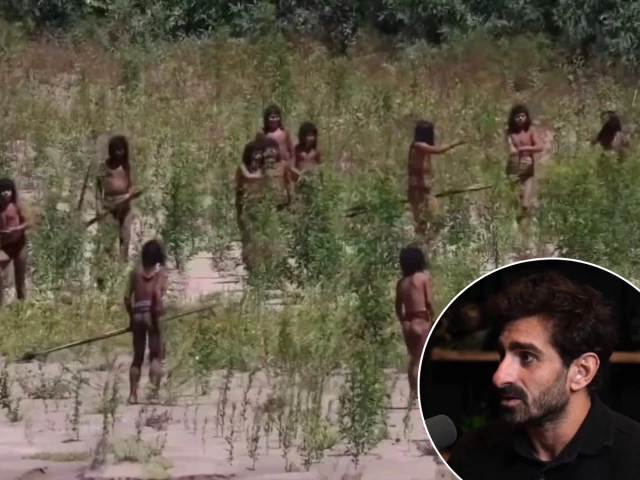
American conservationist Paul Rosolie spoke to Lex Fridman, describing it as the most significant moment in his career
Previously unseen high-definition footage of an uncontacted Amazonian tribe has been revealed during a recent interview between American conservationist and author Paul Rosolie and podcaster Lex Fridman.
Rosolie, who has spent more than two decades working in the Amazon rainforest, described the moment as one of the most significant experiences of his career. “In order for any of this to make sense, I had to show you this footage … This has not been shown ever before. This is a world first,” he told Fridman during the conversation.
Until now, visual records of uncontacted tribes have largely been limited to distant, low-quality images captured using outdated equipment. “The only thing you’ve ever seen are these blurry images … from 100 meters away … and we’re sitting there with, you know, 800mm with a 2x teleconverter,” Rosolie said.
The footage shows members of the tribe emerging onto a beach through a cloud of butterflies, moving cautiously and scanning their surroundings. Armed with bows and arrows, they appear alert as they assess the presence of outsiders. “Look at the way they move. Look at the way they point. Look at him with his bow,” Rosolie says in the clip, referring to one man preparing an arrow.
Rosolie recalled fearing the encounter could turn violent. “I’m looking in every direction … going, ‘Which way is the arrow coming from?’” he said. However, as the group approached, the atmosphere shifted. “As they come closer, they start laying down their … See, he’s laying down his bow and arrow. They understand. No, no more.”
Researchers estimate that nearly 200 uncontacted Indigenous groups remain worldwide, primarily in the Amazon regions of Brazil and Peru. Because contact can be deadly, most knowledge about these communities comes from satellite imagery and indirect observation.
Conservationists warn that increasing industrial activity, including illegal logging and mining, is pushing deeper into remote areas, raising the risk of contact.
Organisations such as Survival International and Brazil’s Indigenous affairs agency FUNAI continue to advocate for strict no-contact policies to protect these vulnerable populations.