

Uomo Attire and the Timeless Art of Dressing Well
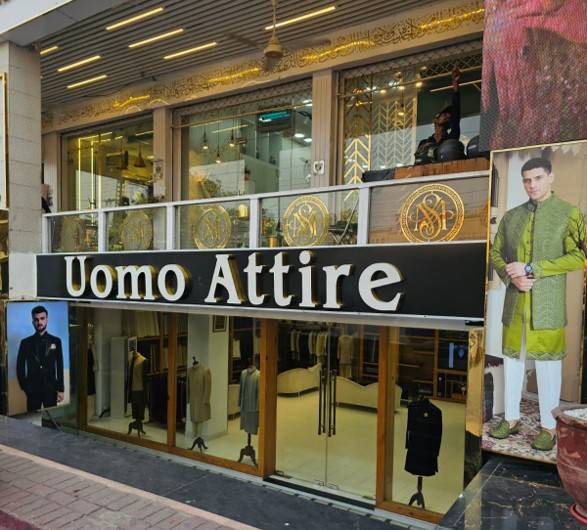
There is a certain kind of confidence that comes with wearing a perfectly tailored suit. Not the confidence that comes from an expensive label or a recognizable designer name, but something far more personal. The shoulders fall exactly where they should, the fabric moves naturally, and every detail seems to understand the person wearing it. It is the sort of elegance that rarely demands attention, yet somehow manages to command it.
For centuries, this has been the promise of bespoke tailoring. A craft built on patience, precision and an almost intimate understanding of the human form. But what happens when that centuries-old tradition meets a world where customers live thousands of miles away, appointments happen over screens, and luxury is increasingly measured by convenience as much as craftsmanship?
Somewhere in that intersection lies the story of Uomo Attire, a Pakistani luxury bespoke menswear brand that is taking an age-old craft beyond geographical boundaries, one carefully tailored garment at a time.
Founded in 2016 by Iftikhar Afzal, Uomo Attire began with an appreciation for something that has fascinated generations of menswear enthusiasts: the unmistakable elegance of Italian tailoring. Afzal was particularly drawn to Italian fabrics, their texture, their quality, and the way a thoughtfully constructed garment could transform the appearance of the person wearing it. Yet his inspiration was never limited to Europe. Back home in Pakistan, he saw an equally compelling story waiting to be told, one of skilled tailors, rich textile traditions and craftsmanship that had quietly flourished for generations.
Pakistan has never lacked the hands capable of creating beautiful clothing. What it has sometimes lacked is the international recognition those hands deserve. While discussions about the top fashion designers in Pakistan have traditionally celebrated elaborate couture, bridal collections and occasion wear, the country’s expertise in fine tailoring has a story of its own. Uomo Attire emerged from the belief that Pakistani craftsmanship could hold its place in the international luxury menswear market without abandoning its roots.
For Afzal, the ambition was not simply to create another clothing label. It was to build a brand around the idea that a garment should begin with the person, rather than the person having to adjust to the garment. It is a philosophy that sounds almost obvious until one considers how much of modern fashion is built around standardized sizes, predetermined designs and the expectation that customers must settle for whatever comes closest to fitting them.
At Uomo Attire, the process works in reverse. A suit begins with a conversation. What is the occasion? How does the customer prefer a jacket to sit? Would a classic lapel feel more appropriate, or something contemporary? What about the lining, the buttons, the fabric, the smallest finishing details that may go unnoticed by everyone except the person wearing them?
These questions form the foundation of the brand’s approach to bespoke suits for men. Its collections range from custom tuxedos and three-piece suits to wedding suits, sherwanis, prince coats and waistcoats, bringing together Western formalwear and traditional Eastern elegance. The intention is not to make every customer look fashionable in precisely the same way, but to understand what dressing well means to each of them.
There is something refreshingly old-fashioned about that philosophy. In an industry increasingly driven by speed, trends and mass production, the idea of clothing made around an individual feels almost rebellious. And yet, paradoxically, Uomo Attire has embraced modern technology to make this traditional experience possible for people who may never set foot inside its showroom.
Consider a Pakistani professional living in New York, or a groom in Toronto preparing for his wedding. He wants a custom-made suit or perhaps a sherwani, something that carries the refinement of traditional tailoring but feels entirely contemporary. Travelling to Pakistan for measurements, fittings and consultations is hardly practical. A decade or two ago, he might have had to compromise on the design, rely on a relative to coordinate the order, or wait until his next visit home.
Today, he can begin the entire process with a video call.
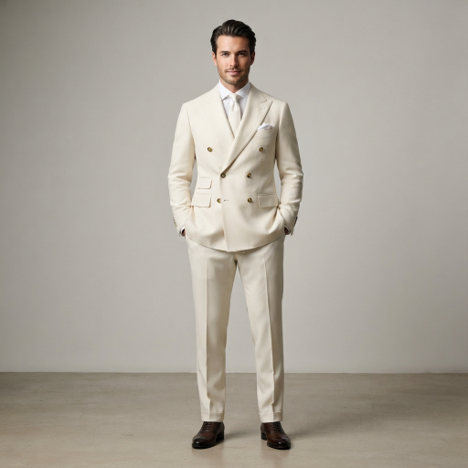
Uomo Attire guides international customers through their measurements remotely, discussing designs, fabrics and preferences while checking the details before production. The outfit is then made in Pakistan and delivered to the customer’s doorstep. For customers in the United States, the brand offers delivery within approximately two weeks, a particularly striking proposition for clothing that is made according to individual specifications.
The distance between a tailor in Pakistan and a customer in America, once a considerable obstacle, becomes little more than a logistical detail.
This is perhaps where Uomo Attire’s approach to custom-made suits in Pakistan becomes most interesting. It is not attempting to replace the art of tailoring with technology. Instead, it is using technology to preserve the personal nature of that art while making it accessible to a much wider audience. The measurements may be discussed through a screen, but the garment itself still depends on the judgement, skill and experience of the people making it.
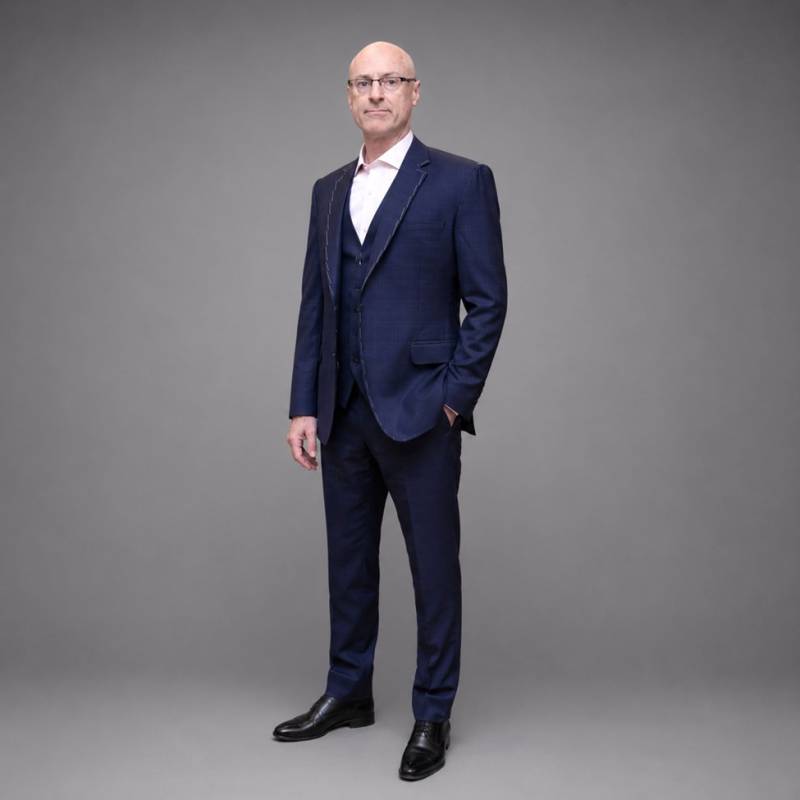
For overseas Pakistanis, the appeal is particularly easy to understand. Weddings and family celebrations often bring with them a desire to wear something connected to home, whether that means an intricately finished sherwani or a sharply cut tuxedo. The ability to commission such clothing without travelling across continents changes the experience considerably. But the brand’s international ambitions extend beyond the Pakistani diaspora. Its made-to-measure menswear also speaks to customers who appreciate personalized clothing, regardless of where they come from.
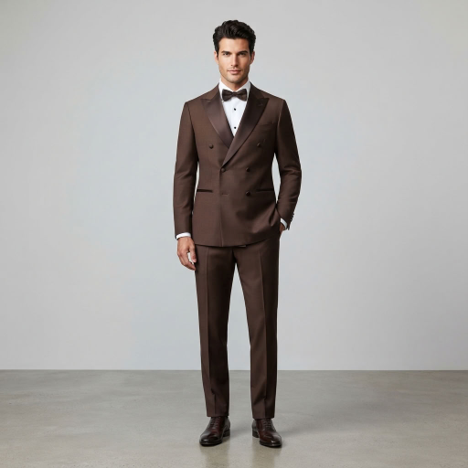
That wider appeal has influenced Afzal’s understanding of fashion. His travels through Europe, North America, Asia and the Middle East, including visits to Milan and participation in fashion events in London, Manchester and Canada, have exposed him to the subtle differences in how men dress across markets. A silhouette admired in one city may feel overly structured in another. Colours, cuts and preferences change, sometimes considerably, from one culture to the next.
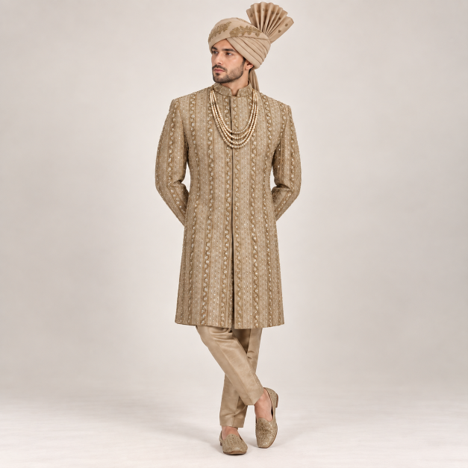
It is a reminder that good tailoring is not merely a matter of taking accurate measurements. It also requires an understanding of proportion, personality, occasion and, increasingly, the cultural expectations of the person wearing the garment.
This sensitivity to international tastes has shaped Uomo Attire’s design philosophy, which draws inspiration from Italian elegance while retaining the precision of traditional Pakistani tailoring. The result is a balance between modern cuts and time-honoured craftsmanship, allowing the brand to move between contemporary Western formalwear and the more elaborate traditions of Eastern occasion wear.
It is also what makes the brand’s journey relevant to the wider conversation around Pakistani menswear designers and the country’s place in international fashion. Pakistan has long been celebrated for its textiles, embroidery and traditional garments, but its potential in contemporary luxury menswear remains a story that deserves greater attention. The skills required to construct a beautifully fitted suit are no less remarkable than those needed to create an elaborate bridal ensemble; they simply express themselves differently.
For Uomo Attire, taking that craftsmanship abroad has meant more than shipping garments overseas. The brand has gradually introduced its collections to international audiences through fashion exhibitions and runway appearances. In 2023, it participated in the Riwayat Lifestyle fashion show at the London Marriott Hotel Grosvenor Square, followed by exhibitions in Manchester and London in April 2024. The Manchester event, held at The Midland Hotel, brought the brand before an audience beyond its established customer base.
Its international presence continued in May 2024 with fashion events in Toronto and Vancouver, while appearances at the SRF Fashion Show in Karachi in June 2024 and the IFFC Fashion Show in Lahore in November 2025 maintained its connection with Pakistan’s own fashion industry.
These appearances tell part of the story of a brand seeking recognition beyond the market in which it was established. Yet perhaps the more meaningful measure of its international ambitions is not a runway in London or an exhibition in Canada, but the ordinary customer who can commission a garment from Pakistan without ever having visited the country.
There is an interesting contrast here. Luxury fashion has historically depended on exclusivity, often expressed through grand showrooms, prestigious addresses and designer labels that carry their own social significance. Bespoke tailoring, however, offers a different kind of exclusivity. Its value lies in the fact that the garment is made for one person, with choices that may never be repeated in quite the same combination.
Afzal’s understanding of luxury leans towards this more personal interpretation. An expensive fabric alone, he believes, does not make an outfit exceptional. What matters is how that fabric is transformed into something that reflects the person who will wear it.
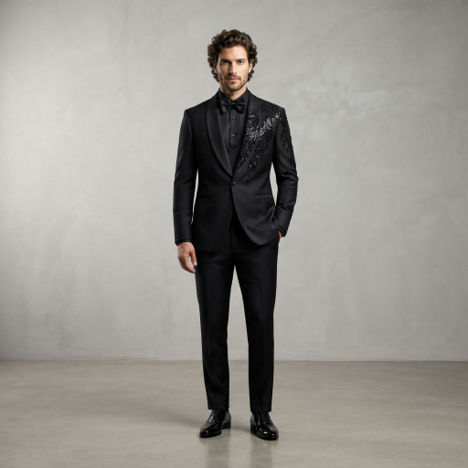
It is a distinction that has become increasingly relevant as customers reconsider what they expect from luxury menswear brands in Pakistan and elsewhere. The appeal of personalization is not necessarily about extravagance. Sometimes it is simply about being able to choose how a jacket fits, how a sherwani is finished, or how a suit reflects one’s personal taste rather than the preferences of a designer or retailer.
For a generation accustomed to customization in almost every aspect of life, from technology to travel, it is hardly surprising that clothing is becoming part of the same conversation.
And this is where Pakistan may have an advantage that is not always adequately acknowledged. The country possesses an established textile industry, generations of tailoring expertise and a tradition of detailed handwork. These are not capabilities that can be created overnight, nor can they be replicated simply by building a fashionable storefront. They are skills developed and refined over time.
The challenge is to connect that expertise with the expectations of contemporary international customers: consistent quality, clear communication, personal service and dependable delivery. Uomo Attire’s business model reflects an attempt to bring these elements together, placing Pakistani craftsmanship within a more accessible global retail experience.
Nearly a decade after founding the brand, Afzal is looking towards a future that includes showrooms in major international fashion markets, a stronger digital presence and continued participation in fashion events around the world. It is an ambitious vision, particularly in an industry where some of the most recognizable names have spent generations establishing their reputations.
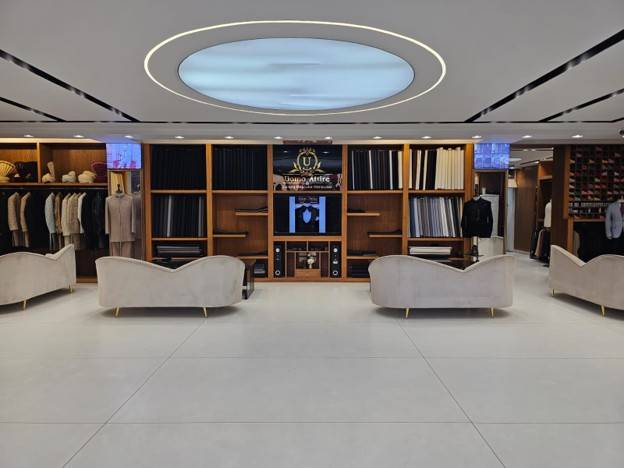
But every established fashion house began with an idea, and the idea behind Uomo Attire remains remarkably uncomplicated: a man should not have to choose between individuality, craftsmanship and convenience.
Whether the brand eventually achieves the international recognition Afzal envisions will depend on how consistently it delivers on that promise. What makes its story worth following, however, is the larger possibility it represents for Pakistani fashion: that the country’s tailoring traditions can find new audiences without losing the qualities that made them valuable in the first place.
There is a certain poetry in that. Italian-inspired elegance, Pakistani craftsmanship, a conversation conducted across time zones, and a garment travelling thousands of miles before finding its place in someone’s wardrobe.
The world of menswear may be changing, but the principle behind a truly good suit has remained almost stubbornly unchanged.
It should never look as though the man was made to fit the clothes.
The clothes should look as though they were made for him.
Discover the collections at uomoattire.com
Founded in 2016 by Iftikhar Afzal, Uomo Attire is bringing a contemporary perspective to Pakistan’s traditional tailoring heritage. From custom suits and tuxedos to intricately crafted sherwanis, the brand combines personalized design, international fashion influences and the convenience of virtual consultations. With clients across the USA, UK and Canada, and delivery to the United States in approximately two weeks, Uomo Attire is making Pakistani bespoke luxury accessible to wardrobes around the world.