



Harry loses High Court privacy case against Daily Mail publisher
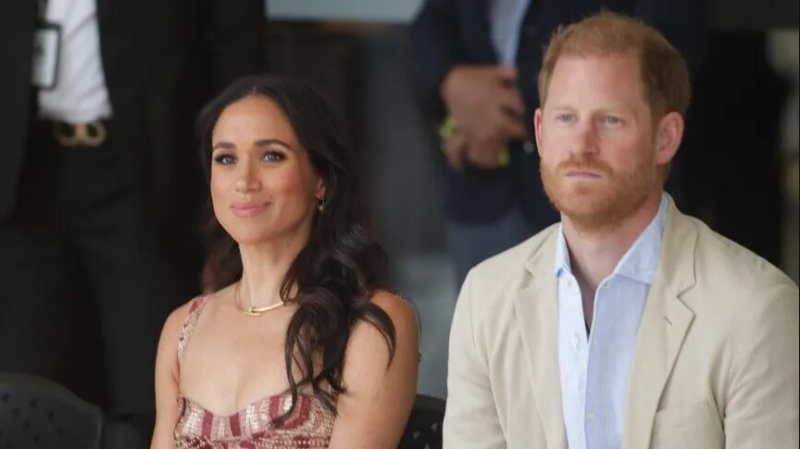
LONDON – The Duke of Sussex and six others have lost their High Court privacy case against the publisher of the Daily Mail and Mail on Sunday. Judge Mr Justice Nicklin said the claimants had failed to prove the allegations of unlawful information gathering. Prince Harry brought the case against Associated Newspapers, along with a number of well-known figures. They claimed that the newspaper group used unlawful methods for getting information for stories, allegations which were strenuously denied by Associated Newspapers. A spokesperson for the publisher described the judgment as an “overwhelming victory for the Daily Mail and its journalists”. The prince did not respond to the BBC’s questions about the judgement as he left an Invictus Games event in London. In a summary of his ruling, Mr Justice Nicklin concluded the allegations were serious and therefore required more convincing evidence before being proven. He said the seven claimants could not rely on “suspicion, even where understandable”. Instead, he said they had to prove information had been obtained unlawfully. Mr Justice Nicklin refused to make a finding as to whether what became known as unlawful information gathering had become “widespread and habitual” at Associated Newspapers and instead decided the merits of each individual claim. He said he accepted the denials of Associated Newspaper journalists “who gave lawful explanations for the sourcing of the disputed articles and incidents”. He ruled that the claimants had also failed to prove three senior Associated executives – former editors Paul Dacre and Peter Wright, and current senior lawyer for the publisher Elizabeth Hartley – had lied in their evidence to the Leveson Inquiry where they said there was no unlawful activity at the Daily Mail and Mail on Sunday. In his full 436-page judgement, Mr Justice Nicklin examined each claimed breach of privacy, and often noted that there was suspicion about how information was obtained by the journalists. In one article, the Daily Mail’s Royal Editor wrote in 2013 that Prince Harry faced a lonely New Year’s Eve without his girlfriend Cressida Bonas. It was claimed a freelance journalist was asked to “blag” travel details for Ms Bonas. Prince Harry said in a witness statement this was “creepy” and he did not know how the newspaper could have obtained the information about the couple’s separate whereabouts.
Mr Justice Nicklin said: “I accept that he found the article intrusive and was genuinely concerned by how journalists appeared to know private information concerning his relationships. But suspicion, even understandable suspicion, is not proof.” Dozens of people gave evidence during the trial, including Prince Harry and the other claimants, as well as many current and former Associated Newspapers journalists and executives who gave evidence denying illegal activity.
During the trial at the beginning of the year, Prince Harry became emotional when talking about the impact of the articles on himself and those close to him, and said Associated Newspapers had made the life of his wife, the Duchess of Sussex, “an absolute misery”.
Other claimants in the case included actors Elizabeth Hurley and Sadie Frost, singer Sir Elton John and his husband David Furnish, former Liberal Democrat minister Sir Simon Hughes, and Baroness Doreen Lawrence, the Labour peer and mother of Stephen Lawrence, who was murdered in 1993.
China sentences official to death for taking $325m in bribes
A court in eastern China has sentenced a former city official to death for taking more than 2.2bn yuan ($325m; £243m) in bribes over 30 years.
Yang Youlin, who served in various positions in Nanjing city from 1993 to 2023, was also convicted of embezzlement, abuse of power and money laundering, with his ill-gotten gains amounting to one of the highest in recent years.
The 69-year-old exploited his roles to help others secure engineering contracts, land transfers and financing, in exchange for money and valuables, said state media.
Yang was investigated as part of President Xi Jinping’s anti-corruption crackdown which has cut through military ranks and high-level banking, among other sectors.
Yang, who spent much of his career working on economic and technological development in Nanjing, had committed offences “of an extremely serious nature” and “caused exceptionally heavy losses to the interests of the state and the people”, a court in Changzhou city said on Monday.
Since coming to power, President Xi has launched waves of anti-corruption drives, which critics say have also been used as a tool to purge political rivals.
Death sentences for white collar crimes however remain rare, though they are meted out occasionally, typically if the cases involve large sums exceeding 1bn yuan.
For instance, former finance chief Lai Xiaomin was executed in 2021 for taking 1.8bn yuan in bribes over a 10-year period.
Li Jianping, a former Inner Mongolia official, was executed in 2024 for embezzling and taking bribes totaling more than 3bn yuan.
In many other cases, the courts handed out jail terms or suspended death sentences, which get commuted to life imprisonment after a specified duration.
The courts have also reduced sentences in some cases where the convicted individuals reported on other offenders.
But while Yang provided similar assistance to authorities, his offences were so “grave” that his assistance “was insufficient to warrant a more lenient punishment”, the Changzhou court said.
Yang pleaded guilty and “expressed remorse in his final statement”, according to state media.