



‘The Legend of Maula Jatt’ set for China release in cultural milestone
Released in 2022, it became a Lollywood hit, earning $14m and becoming Pakistan’s priciest film
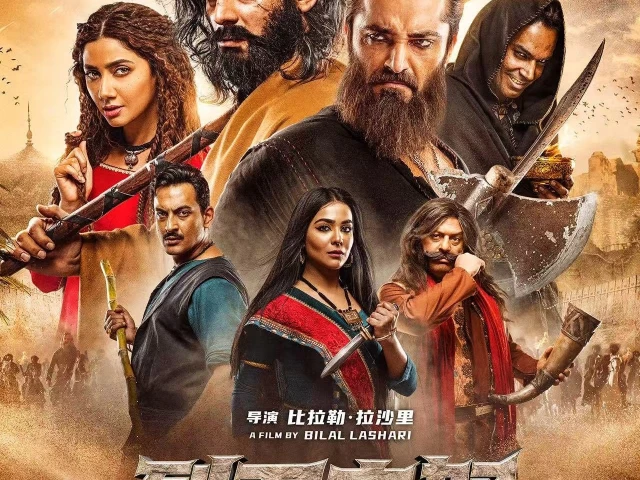
The Mandarin version of The Legend of Maula Jatt, is set to release in China on May 21. PHOTO: BILAL LASHARI X
Pakistan’s highest-grossing film, The Legend of Maula Jatt, is set to release in China on May 21, marking an important moment in cultural diplomacy between Islamabad and Beijing beyond their longstanding strategic and military partnership, according to The Diplomat magazine.
The announcement was made by the film’s director, Bilal Lashari, who shared a Mandarin-dubbed trailer of the movie on his X account. The release is being viewed as a rare achievement for Pakistan’s entertainment industry, as the film has secured entry into China’s tightly controlled foreign-film quota market.
🇵🇰 🇨🇳 ‘The Legend of Maula Jatt’ has broken into one of the most exclusive film quotas in the world — the first Pakistani film ever to do so.
In cinemas across China from May 21, 2026.
A huge moment for Pakistani cinema, and a new door opening for our stories on the world stage. pic.twitter.com/SU0c6uAF4j— Bilal Lashari (@blashari) May 9, 2026
Pakistan and China are often described as “iron brothers”, with relations largely shaped by defence cooperation and economic projects under the China-Pakistan Economic Corridor. However, despite deep political and economic ties, cultural exchange between the two countries has remained limited. Analysts say the release of The Legend of Maula Jatt represents one of the few attempts to expand the relationship into the cultural sphere.
Read More: ‘The Legend of Maula Jatt’ to test its might in China
Released in 2022, the film became a landmark success for Lollywood, earning nearly $14 million globally and emerging as the most expensive and commercially successful Pakistani movie ever produced. The film revived the traditional “gandasa” genre, centred on revenge, rural rivalries and Punjabi folklore, while presenting it with modern cinematic production values. The story draws inspiration from writer Ahmed Nadeem Qasmi’s short story Gandasa.
Despite the excitement surrounding the China release, industry observers believe commercial success is far from guaranteed. Experts point to language barriers, cultural differences and limited promotion ahead of the release as key challenges in a market dominated by local productions and emotionally driven social dramas.
Chinese audiences have previously embraced Indian films such as Dangal and Hindi Medium, which resonated through themes of family, education, and social pressure. In contrast, The Legend of Maula Jatt is a revenge-based epic heavily reliant on Punjabi dialogue, verbal exchanges, and regional folklore that may prove difficult to fully translate through dubbing.
Previous cultural collaborations between Pakistan and China, including the films Parwaaz Hai Junoon and Ba’Tie Girl, failed to generate sustained momentum. As a result, analysts see the upcoming release as a test case rather than evidence of an established cultural partnership.
Observers say the long-term impact will depend on whether more Pakistani productions can follow. Animated feature The Glassworker, praised internationally for its anti-war message, is being discussed as a possible future candidate for Chinese cinemas, particularly as China’s animation market continues to expand after the success of Ne Zha 2.
Analysts believe the Chinese release could open new opportunities for Pakistani cinema in one of the world’s largest film markets. China has increasingly emerged as a global cinematic powerhouse, particularly after the massive success of animated blockbuster Ne Zha 2. At the same time, Beijing’s growing scrutiny of Hollywood content has created space for non-Western cinema. Indian films such as Dangal and Hindi Medium previously performed strongly in China due to their emotional and family-centred narratives.
The film’s release is being seen as an important step towards deeper people-to-people engagement between Pakistan and China, potentially paving the way for future co-productions and broader cultural collaboration.