



The writer who defied conventions
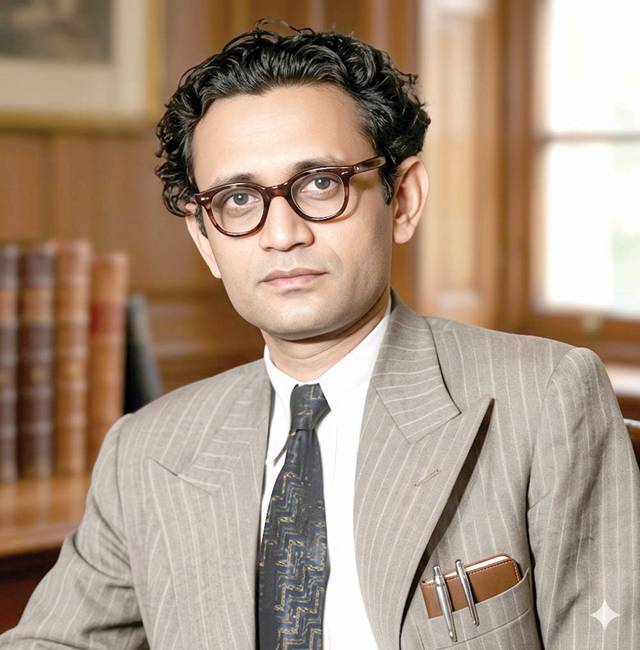
KARACHI – May 11 marked the 114th birth anniversary of one of the distinguished novelists and short story writers, Saadat Hassan Manto, popularly known as Manto. One of the most controversial figures of South Asia’s literary history, he gained prominence by vehemently writing on sensitive social issues and unabatedly discussing human behaviour and human urges in his stories and novels. He was born on 11th May 1912 in the Ludhiana area of Punjab in British India, in a Muslim Kashmiri family, to a judge, Maulvi Ghulam Hussain. Manto was from the second wife of Maulvi Ghulam Hussain, who had a stainless reputation in the judiciary of undivided India and was known for his strict decisions and harsh attitude. Perhaps it was the harshness of his father and the indifferent attitude of his foster siblings that made Manto one of the rebellious characters of the 20th century in the subcontinent. Manto lived in this finite world for merely 42 years, 8 months, and 15 days but left a definite mark on the world of Urdu literature by contributing relentlessly to its different genres, including novels, short story writing, fiction, and playwriting. During a brief career of 20 years, Manto penned around 270 short stories, around 100 dramas, more than 20 novels, and stories of several movies in the undivided subcontinent and then in Pakistan. Before independence, in an undivided subcontinent, Manto was recognised as an emerging dramatist, film writer, and short story writer who was able to earn substantially by writing stories for the film industry of the subcontinent and writing novels for noted Urdu magazines. It is also an interesting fact of Manto’s life that before becoming an eminent Urdu novelist, he even struggled to succeed in the exam of Urdu during Matriculation. After completing his Intermediate, Manto came under the mentorship of Bari Alig, a seasoned journalist and writer of his era and an editor of the famous Urdu daily Masawat – Equality. Under the guidance of Alig, he translated the English book The Last Day of a Condemned Man by Victor Hugo into Urdu. He shaped the writing skills of young Manto but couldn’t marshal his shattered thoughts influenced by childhood traumas, isolation, and persistent struggle. Then Manto also translated noted English writer Oscar Wilde into Urdu and sought Akhtar Shirani for betterment. The first short story of Saadat Hassan Manto, Tamasha, inspired by the Jallianwala Bagh incident, was published in the Urdu magazine Khalq. After finding himself efficient in Urdu, Manto moved to Bombay aiming to make a mark in the film industry as a writer. Soon he found employment in a film company and married Safia, the lady who stood by him till his last breath despite all odds. In 1940, he joined All India Radio in Delhi, where he found the company of noted literary figures of the 20th century, Noon Meem Rashid and Krishan Chander, who further boosted his abilities. The incident of partition left a devastating impact on the life and personality of Saadat Hassan, and with time he emerged as an unequivocal writer. He unhesitantly criticized the gusty norms of society, the hypocritical approach, human need, behaviour, social injustice, and human desire. Saadat Hassan Manto had cordial terms with noted literary figures of Pakistan as well as those associated with the film industry. Following his bond with the iconic singer and actress of the Subcontinent and Pakistan, Madam Noor Jehan, he authored the story Noor Jehan Suroor-e-Jahan. He faced charges of obscenity for writing stories like Thanda Gosht, Khol Do, and Kali Shalwar, while his stories Toba Tek Singh, Hatak, Naya Qanoon, and Tetwal Ka Kutta gained unparalleled recognition across the Subcontinent. Following his stern approach in the content of his work, publication of his writings was banned multiple times by the Pakistan Government. Manto was addicted to alcoholism, which deteriorated his physical and reportedly mental health.
Due to his addictive and manic nature, he was multiple times lodged in a mental asylum and also faced a financial crisis. Despite a life filled with controversy and struggle, Manto is still popular even among the Gen Z generation. In a tribute to Manto, a private TV channel aired a telefilm Manto in 2015–16, a commendable effort by Sarmad Khoosat, who remarkably depicted the character of Saadat Hassan Manto and gained critical acclaim. He passed away after a protracted illness in 1955. Manto was posthumously awarded Nishan-e-Imtiaz by the Government of Pakistan in 2012.