



Japan launches world’s first mission to collect samples from Martian moon
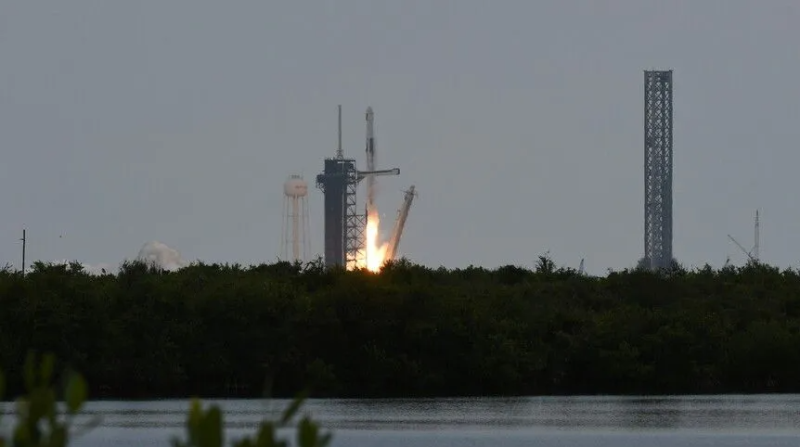
Japan successfully launched a spacecraft Tuesday on the world’s first mission to collect rock and sand samples from a Martian moon, according to the country’s space agency.
The Martian Moons eXploration (MMX) probe separated successfully from an H3 rocket and entered its planned orbit, the Japan Aerospace Exploration Agency (JAXA) announced, according to Kyodo News Agency.
The rocket lifted off from the Tanegashima Space Center in southwestern Japan at 4.41 am local time (1941GMT Monday).
JAXA project manager Makoto Arita said the spacecraft had reached its planned orbit with “exceptional precision.”
The 4,480-kilogram spacecraft will travel to Phobos, the larger of Mars’ two moons, and is scheduled to enter Martian orbit in August 2027.
A French-German rover will first land on Phobos, followed by two planned landings by the Japanese spacecraft to collect samples.
The probe will subsequently observe Mars’ second moon, Deimos, before departing Martian orbit in November 2030. It is expected to return samples to Earth in July 2031.
Prime Minister Sanae Takaichi welcomed the launch, expressing hope that the historic mission would succeed.
The launch was originally scheduled for 2024 but was delayed following the failure of the H3 rocket’s maiden flight in 2023.
The international MMX mission seeks to determine how Mars’ moons formed and advance technologies for future planetary exploration.