



One dozen old ‘Mohallas’ in interior city reflect vanishing traditions
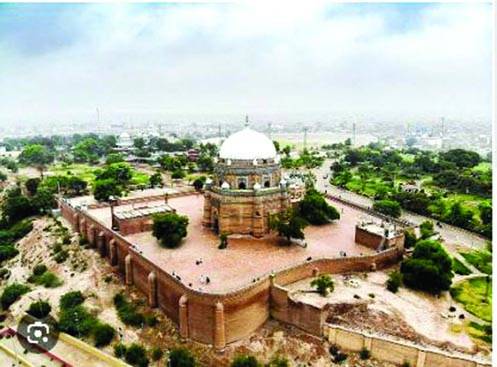
MULTAN – The ancient city of Multan, often described as one of the oldest living cities in South Asia with a history spanning nearly 5,000 years, still preserves its cultural identity through its historic “mohallas”, traditional neighborhoods that once thrived as centers of specialized crafts and professions. A mohalla, in the context of old Multan, refers not just to a residential area but a close-knit community often associated with a particular trade, skill, or social group. These nearly 12 “mohallas” in the interior city, formed the backbone of the city’s economic and cultural life, where generations inherited and practiced the same craft. Talking to mediamen, Walled City Authority guide Amir Bashir said that although many of these traditional professions have nearly vanished, the names and historical significance of these “mohallas” continue to reflect Multan’s rich and diverse heritage. He explained that “Mohalla Kaman Garaan” was once famous across the subcontinent for producing finely crafted bows, decorated with intricate designs by skilled artisans. Similarly, “Mohalla Dar-Khana Wala” was known for its woodworkers, whose craftsmanship can still be seen in the carved wooden structures of old buildings. Near Daulat Gate, “Mohalla Kumharan Wala” served as a hub for pottery, where clay utensils were produced in large quantities. Many shops of clay pots could be seen there till now. Similarly “Mohalla Neel Garaan” was renowned for its indigo dyeing, a trade that once held strong demand in regional markets. Amir Bashir further maintained that “Mohalla Kapri Patolian” was home to artisans who specialized in threading pearls into silk strings which is an intricate craft that enjoyed popularity throughout the subcontinent. Meanwhile, “Mohalla Kashi Garaan”, located outside Daulat Gate, was associated with tile makers and ceramic artisans. He added that “Mohalla Kaghaz Katt” was historically known for producing silver foil (varq), a delicate craft that is now almost extinct. Similarly, “Mohalla Qazi Wala” was where the city’s judges (qazis) resided, and their descendants still live in the area today. Another significant neighborhood, “Mohalla Hakeeman Wala”, was once a center for traditional herbal medicine practitioners (hakims), whose reputation extended across the region. Though their numbers have declined remarkably, a few practitioners can still be found, said Amir Bashir. Another popular “Mohalla Sootri Watt” was associated with the production of ropes used in charpoys (traditional beds), however now some food shops are too much popular while. “Mohalla Purana Awa” functioned as a marketplace for brick kilns and pottery production. “Today, these crafts are nearly non-existent, as the younger generation is not inclined toward adopting ancestral professions,” Amir Bashir said.
“However, the names of these mohallas still preserve the memory of those trades and reflect the diversity and vibrancy of Multan’s past.” He emphasized that exploring the interior city offers a unique glimpse into history, where every street and mohalla tells a story of craftsmanship, community, and cultural evolution. Despite modern changes, the historic mohallas of Multan remain a living testament to the city’s glorious past—quietly echoing the skills, traditions, and identities that once defined this ancient urban center, Amir concluded.