





NASA plans lunar fire study to boost astronaut safety under Artemis
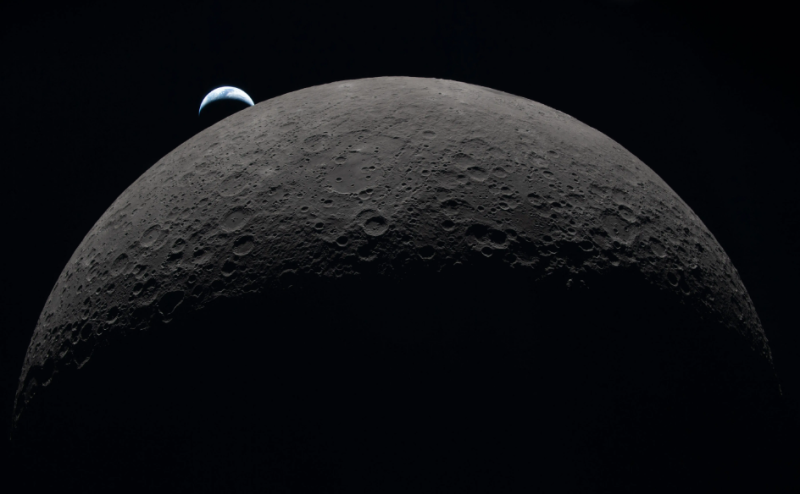
As NASA prepares to return humans to the Moon under its Artemis programme, scientists are advancing research into fire safety for future deep-space missions and lunar habitation.
At the Lunar and Planetary Science Conference, researchers unveiled a new project titled “Flammability of Materials on the Moon”, aimed at studying how fires behave in the Moon’s unique gravitational environment.
The mission, scheduled for launch in late 2026, will involve igniting four different fuel samples and observing flame behaviour over time under lunar gravity. The findings are expected to address critical gaps in understanding combustion beyond Earth.
On Earth, flames take on a teardrop shape as gravity causes cooler air to sink while hot gases rise. In contrast, combustion in microgravity produces more spherical flames, significantly altering how fires spread.
While NASA has conducted extensive combustion experiments in orbit to establish spacecraft safety standards, experts say these models may not directly apply to the Moon, where gravity is weaker but still present.
Preliminary numerical models suggest that lunar conditions could, in some cases, create more hazardous fire behaviour than zero-gravity environments. Researchers believe flame spread rates may peak under certain partial gravity conditions, posing challenges for the design of future habitats and astronaut protective gear.
If successful, the mission is expected to provide key benchmark data to improve safety measures for Artemis crews. However, scientists note that comprehensive testing of materials will ultimately require a sustained human presence on the lunar surface.
The study is also expected to deepen scientific understanding of combustion and physics in space, contributing to safer and more efficient long-term lunar exploration.