



China on the eve of commercial spaceflights taking off
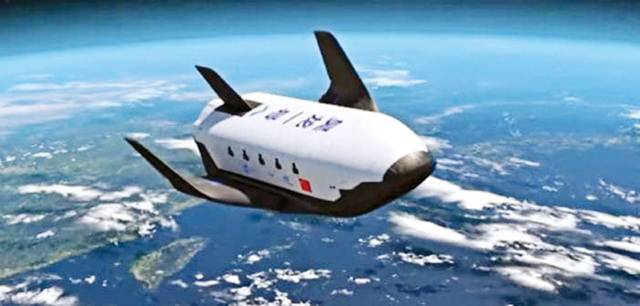
BEIJING – The year 2026 might be monumental for China’s commercial space sector as industry players anticipate key breakthroughs in recoverable rockets, according to China Economic Net (CEN). Building on the momentum of LANDSPACE’s nearly successful first-stage recovery of its Zhuque-3 rocket at the end of last year, more models are expected to make their debut flights in the coming months, from Galactic Energy’s PALLAS-2, Space Pioneer’s Tianlong-3 which has completed ground testing for “delivering 36 satellites in one launch”, and CAS-SPACE’s Kinetica-2, etc.
Deep Blue Aerospace’s Nebula-1 is now ready for launch at its pad in Shandong, a province eastern China. SEPOCH, which has completed offshore flight recovery tests with its reusable product, aims for a successful orbital launch and recovery by year end. Earlier this year, InterstellOr, China’s first commercial “human spaceflight technology” company, announced that over 20 people from all walks of life, including actor Johnny Huang, academicians, CEOs, and entrepreneurs have signed up for China’s first-ever space trip due in 2028 at RMB 3 million. Companies, as well as investors, are geared up for the fast track. According to a research report, the sector saw a 32% year-on-year growth in total financing in 2025, reaching RMB 18.6 billion.
Just a decade ago, fewer than 10 private companies were operating in China’s commercial space sector. Today, that number has surpassed 600. In December 2025, China launched its first specialized fund. Currently, at least five companies are progressing towards public listings. LOX-Methane rocket developer i-Space, the first private company in China to launch a carrier rocket into orbit, raised a record-breaking 5.037 billion RMB last month.
In an outlook for the next five years, Mingyuan Technology Innovation Center forecasts under the pressure of tight deadlines tied for constellation deployments, China’s commercial space launch frequency is expected to surge from 54 launches in 2025 to approximately 860 by 2030, representing a compound annual growth rate of 74%. Earlier this year, the International Telecommunication Union (ITU) website revealed that between December 25 and 31 last year, China submitted a request for orbital resources for an additional 203,000 satellites– its largest-ever international frequency and orbit filing to date. For the first time, aerospace is listed as an “emerging pillar industry” in China’s government work report submitted Thursday to the National People’s Congress (NPC) for deliberation. Industry forecasts predict a significant rise in the frequency of launches this year as China’s reusable rockets enter the recovery verification phase.
At the end of 2025, LANDSPACE’s Zhuque-3 and CASC’s Long March 12A successfully completed their maiden flights, with the former missing its rocket’s first-stage recovery by just 40 meters and aiming for another try in the second quarter this year.
Despite the setback, professionals believe that it successfully validated the key technologies for liquid oxygen-methane reusable rockets, marking a milestone as private rocket companies gradually build up real, usable capacity.
Experts predict China’s reusable rocket technology will evolve in three phases: Phase 1 (2025-2027) will focus on validating core technologies like vertical landing, attitude control, and landing cushioning. Phase 2 (2027-2029) aims for a recovery success rate over 90%, with rockets reused 20+ times and costs reduced by 50%. By Phase 3 (2029-2030), reusable rockets will be commercially applied. Currently, the launch cost for reusable rockets is more or less RMB 100,000 per kilogram, with a target of reducing it to RMB 20,000.
Companies are cutting costs by iterating designs to improve recovery success and reduce hardware amortization.
According to a manager at 3D printer developer ZRapid Tech, the adoption of 3D printing, which can produce up to 85% of weight in rockets’ engines.