




An icon of Islamic architecture welcomes Ramazan with faith, fervour
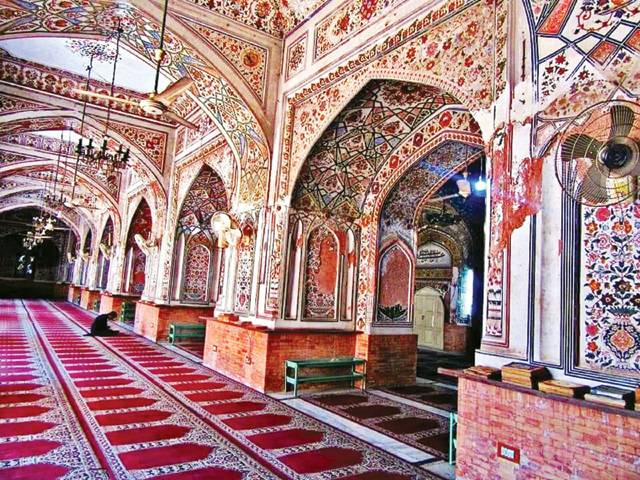
PESHAWAR – Fourteen-year-old Ibrahim Khan could hardly contain his emotions as he broke his first fast inside the majestic courtyard of the historic Mohabat Khan mosque on Thursday evening. Arrived from Nowshera district with his father, Ibrahim had long cherished the dream of offering Iftar and performing Namaz-e-Taraweeh at the centuries-old mosque whose wish was fulfilled this Ramazan with the blessing of his grandfather. “I was overwhelmed,” Ibrahim said as his eyes scanning the towering white minarets and intricate frescoes of the historic mosque built by former Governor Mohabat Khan at the heart of Peshawar City in 1680. “I had heard a lot about its history from my elders and teachers, but seeing it in person yesterday is something very special. It feels like stepping back in ancient time,” Ibrahim wearing Shalwar Qamees with white cap told. Riaz Khan, his grandfather and former PST tescher said that they will come again here for Mahfil Shabina during last Ashra of Ramazan ul Mubarak. Peshawar being a gateway to the subcontinent and Central Asia, had for centuries stood at the crossroads of empires and dynasties whose rulers constructed mosques, temples, churches, and gurdwaras that reflected the region’s diverse heritage and love for Islam. Bakhtzada Muhammad, Assistant Director at the KP Archaeology Department told APP on Friday that Islam began spreading in the border areas of Khyber Pakhtunkhwa and Afghanistan after Sabuktigin, the Turkic commander who founded the Ghaznavid dynasty in 977 AD. His son, Mahmud of Ghazni, consolidated power and extended his influence into Punjab after defeating Raja Jayapala at the Battle of Peshawar in 1001 AD. The victory marked a turning point in present day KP, encouraging the construction of mosques across Bannu, Waziristan, Khyber, Peshawar and other regions.
One of the earliest examples is the historic Odigram Mosque, also known as Sultan Mahmood Ghaznavi Mosque, built in 1048 CE on the orders of General Amir Nustagin. Its Arabic inscription, discovered in 1984, authenticated its origins and significance, he said.
Over centuries, more places of worship emerged in KP, including the Yakagund Mosque in Mohmand district, Sheikh Habib Mosque at Bala Manarai (1650), and Gunj Gate Mosque (Khawja Maroof) at Peshawar, each reflecting the city’s evolving spiritual landscape and abode of Islam. He said the crowning jewel among them remains the Mohabat Khan Mosque constructed by Mughal rulers in 1680 under the governorship of Nawab Mohabat Khan. Mohabat Khan mosque is a magnificent blend of Islamic and Mughal architectural traditions, attracting architecture lovers and Muslims from across world. A small portion was initiated during the reign of Shah Jahan, while much of the structure was completed under Mughal emperor Aurangzeb. The mosque reached completion around 1680 after years of hard work. Built on a high mound in Andar Shehr Bazaar near Chowkyadgar, the mosque spans over 30,000 square feet. Its vast open courtyard can accommodate nearly 40,000 worshippers at a time. Two towering minarets frame the skyline, while six smaller decorative minarets crown the façade. Three elegant white domes rise above the prayer hall, their symmetry capturing the essence of Mughal aesthetics. The interior ceiling is adorned with red frescoes featuring geometric and floral motifs, while the exterior gleams with marble and delicate ornamentation. A centrally located ablution pool reflects the domes above, creating a serene spiritual ambiance. Despite damage during Sikh rule and later neglect, the mosque was renovated in 1898 and again after the British period. In 1982, he said the KP government declared it a protected historical site, placing it under the Auqaf Department. For many residents, the mosque is more than an architectural marvel rather it is the beating spiritual heart of Peshawar. “For the last 20 years, I have been offering Jumma prayers and Taraweeh at Ramazan here,” said Salim Khan, a local resident of Peshawar. “The spiritual atmosphere at the historic mosque during Ramazan take worshipers to another world.” he said.
The mosque also played a historic role during the Soviet invasion of Afghanistan in 1979, when Afghan tribal elders gathered here to foster unity. Recent conservation work on its minarets, domes, and ablution areas has restored much of its original grandeur. Though concerns remain about encroachments and illegal constructions around it affecting its exterior beauty, the renewed preservation efforts have enhanced its appeal. On the first day of Ramazan, thousands of worshippers filled its courtyard, shoulder to shoulder, united in prayer and prayed for mercy. As the call to Taraweeh echoed under the starlit sky, young Ibrahim stood beside his grandfather, feeling both small and deeply connected — a new spiritual link in a centuries-old chain of faith and love for Islam. For Ibrahim, and for thousands of others, Mohabat Khan mosque is not just a monument of marble and frescoes rather it is a living symbol of devotion, and the timeless spirit of Peshawar especially during Ramazan.