





South Asia’s 20 icons dominate 21st Century’s global impact poll
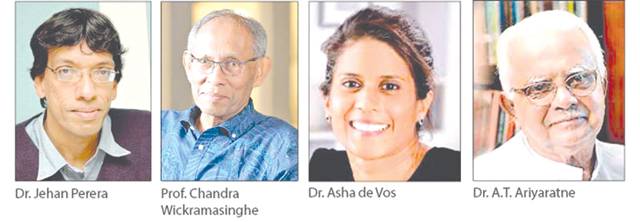
LAHORE – As many as global nominees have been unveiled as finalists by the Impact Hallmarks©, out of 1.9 million notables from 195 countries — including 20 from South Asia and China — for its international opinion poll linked to the Quarticentennial Merited Impacts Gazette (2000–2025), an initiative aimed at identifying individuals who have significantly shaped the 21st century through measurable and lasting impact. According to a press release issued here on Tuesday, public voting for the global exercise has opened online [https://www.impacthallmarks.org/#voting], extending participation to citizens worldwide as the platform seeks to evaluate influence not by visibility but by tangible contributions across scientific, humanitarian, ecological and socio-economic domains. The South Asia-China cohort reflects a diverse spectrum of contributions. Among them are Chinese humanitarian Chen Si, known for preventing hundreds of suicides through direct intervention, and scientists such as Prof Aurangzeb Hafi and Prof Chandra Wickramasinghe, whose work spans interdisciplinary scientific inquiry and astrobiology. Environmental contributions are represented by Dr Asha de Vos and Yi Jiefang, while economic inclusion efforts are highlighted through Prof M. Yunus and Dr Amjad Saqib, pioneers of microfinance and interest-free financial systems. Rights advocacy and social welfare are also prominent, with figures such as Kailash Satyarthi, Dr Jehan Perera, Pushpa Basnet and Parveen Saeed recognised for advancing child protection, reconciliation, and community care. Innovators including Dr Fathima Benazir J. and Nitesh Kumar Jangir have been acknowledged for life-saving technological and scientific work. The list further includes individuals symbolising resilience and legacy. Arunima Sinha, the first female amputee to summit Mount Everest, represents human endurance, while late humanitarian icons Bilquis Edhi, Dr Ruth Pfau and A.T. Ariyaratne are recognised for enduring contributions to social welfare and public health. Among the nominees, Prof Aurangzeb Hafi stands out for his cross-disciplinary research spanning cosmology, environmental science, public health modelling and digital education. His conceptual frameworks, including Magneto-Hydro-Tropism (MHT) and the IRT Terato-kinetics model, aim to integrate biological and environmental systems. His applied work includes COVID-19 modelling, environmental toxicity mapping and early-warning public health systems. Hafi also led field-based humanitarian research during the 2004 Indian Ocean tsunami in Sri Lanka, overseeing Child Retardation Risk Assessment and Management programmes in high-risk zones.
He later declined a Nobel Prize nomination in 2006, citing ethical concerns related to funding sources. The nominations also feature emerging youth voices, including Ubaida Al Fiddhah Hafiah, 11, and Ghulam Bisher Hafi, 13, whose “Voice for the Voiceless” campaign highlights the plight of children in conflict zones. According to organisers, the initiative aims to serve as a “living ledger of influence,” documenting contributions that have produced sustained societal impact rather than transient recognition.
The Quarticentennial Merited Impacts Gazette is intended to function as a long-term record of global influence, reflecting values, priorities and transformative endeavours that have defined the first quarter of the 21st century.