




Palak Gosht (Pakistani Mutton Curry with Spinach) Recipe
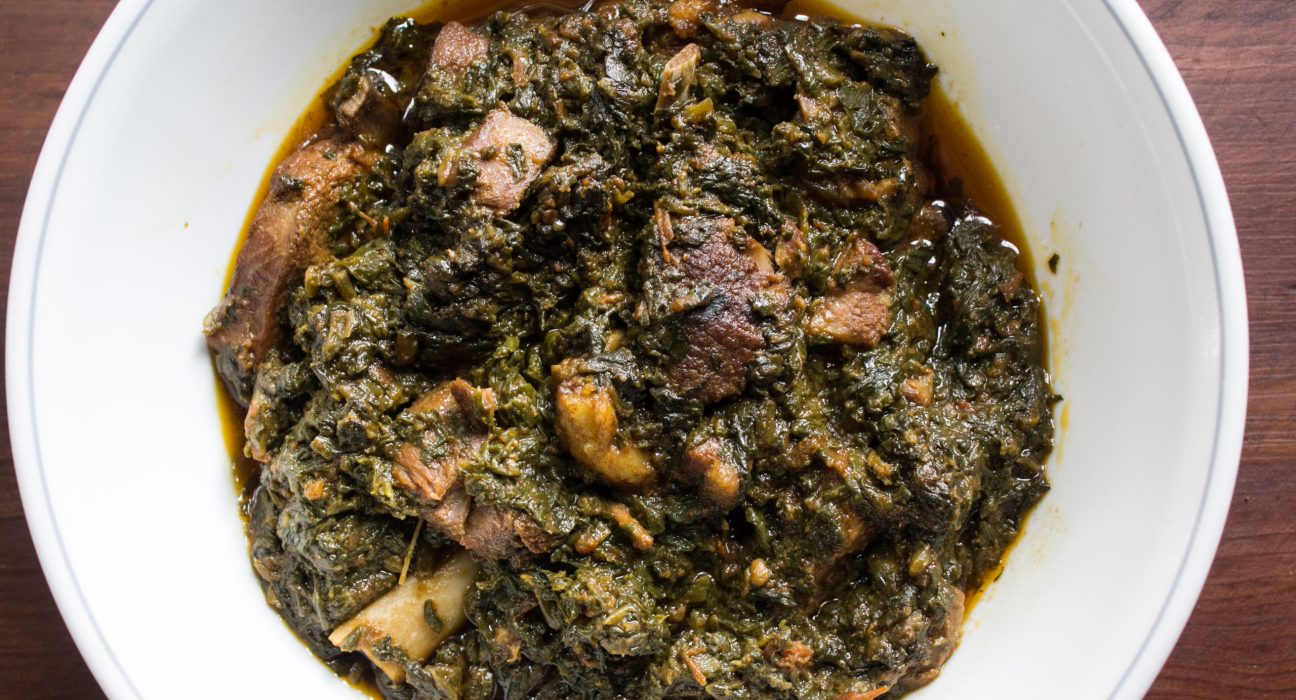
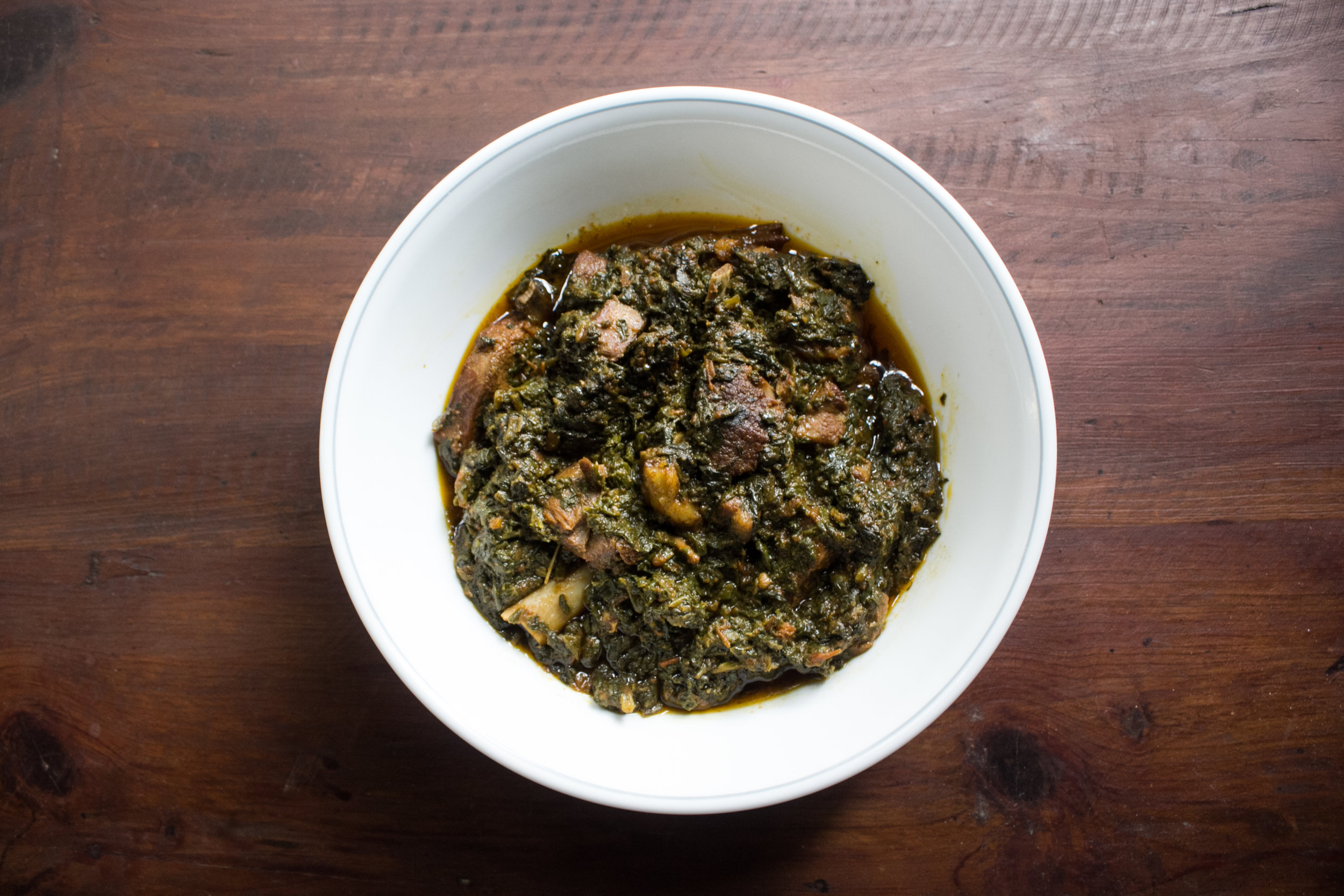
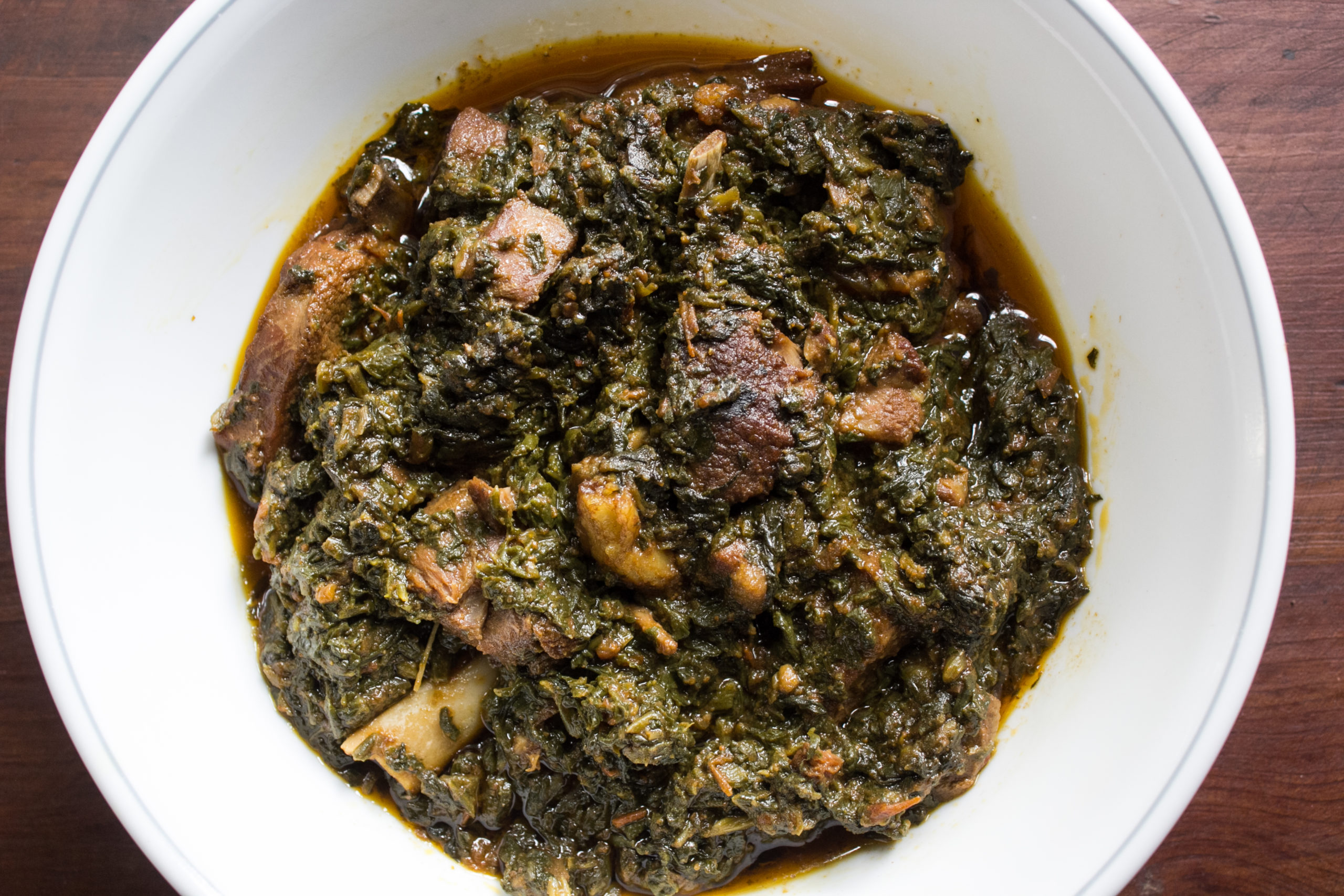
Palak gosht — mutton slow-cooked with fresh spinach— is a definitive dish in my mother’s Punjabi kitchen in Pakistan. It is the kind of curry that appears on the table without fanfare and disappears before anything else does. This recipe came to me from Shahnaz, our home cook in Islamabad, who taught it to me during the last week of a two-month trip home. Mutton and spinach are a beautiful match, and a perfect complement to both rice and roti.
Jump to:
When I first left Islamabad for the United States, I didn’t cry. On the plane in between bouts of sleep, I kept thinking of the thick bamboos lined alongside the lawn in our home. I would enjoy looking at them from our TV room. They had grown tall enough to brush and bump against its windows on a windy day. I was thinking of Jahangir, our gardener watering the plants under the forgiving gaze of the early evening sun, quietly moving from one pot to the next.
Soon after I left, my mother got the bamboos cut and my father fired Jahangir for reasons that I don’t quite understand and that I don’t completely forgive them for. Jahangir had been coming to our house since I was ten years old. His daily presence and the quiet hum of our garden that he had built over the course of fifteen years had come to thread together my memories of home.
It’s funny how when we look back at places, it’s the strangest scenes that stick.
When I was getting ready to pack after my two months in Pakistan, my mother kept asking if I had had a good trip. She was worried because I was leaving stressed and frustrated, mostly because of work but also because I was leaving with things unfinished.
Given that I had come to Pakistan for two months, I had a long list of things I wanted to “accomplish” (see last post). Places to see. Collaborations to pursue. People to reconnect with. But of course, if you are from Pakistan, you know that Pakistan and Pakistanis are notoriously difficult to predict. Time is fluid except when it’s not. People are flexible except when they are not. So weeks passed by, I went around in circles, and ultimately grew frustrated and restless.
And so I gave my poor mother a mixed response, “It’s been good but I’m ready to go back”.
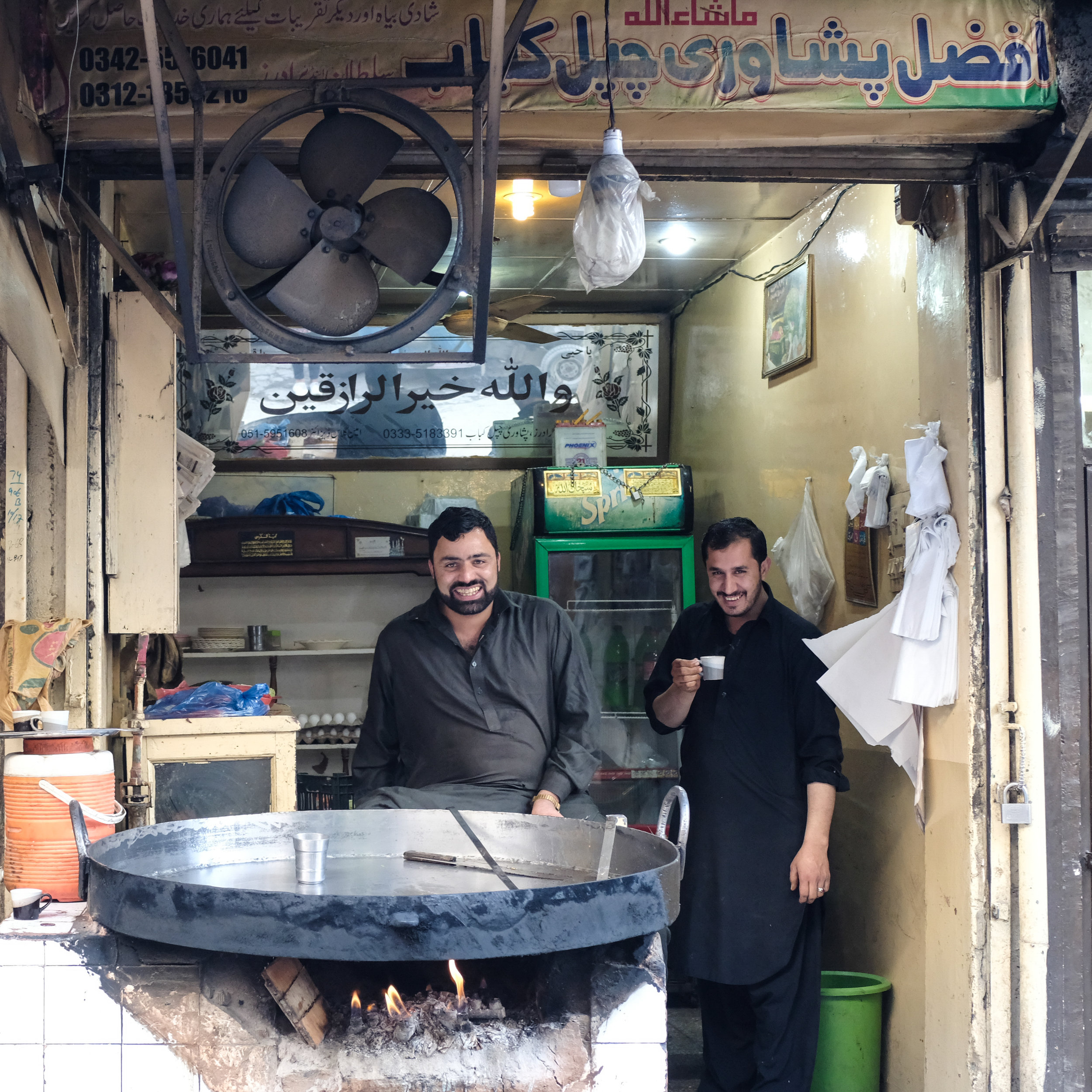
As I have settled back into my life at Juarez, a new crop of memories have slyly begun to appear. As I’m typing, I’m overhearing the cries of the “radee wala” (recycling guy) bike outside my parents’ house. Of our home building up to a steady chatter in the late morning. Of experiencing a distinct shift of seasons – putting away the heaters, opening the windows and letting the air and sound of my father’s clamoring parakeets in.
I know now, what the trip did, what it “accomplished”. It colored the fading backdrop of Islamabad in my mind. Against this enriched backdrop, I can now place the time spent with my aunts, uncles, cousins, friends and parents. Of digging my nails into ripe oranges under the gentle winter sun. Of drinking doodh patti while listening to qawwali alongside the centuries-old Buddha caves. Of finally paying attention, and noting the gradual transitions to retirement, parenthood, early adulthood.

Luckily, in February, Saptarshi also visited, and I had the luxury of playing tourist with him. Together we dragged my mother to show us old Pindi. We walked through moti bazar, the old spice market and then to the vibrant but dilapidated Jamia Masjid. My father took us to Taxila and then, to the Gurdwara Panjab Sahib in Hassan Abdal where we watched small turbaned school children play against the steady hum of Sikh prayer in the evening. On the way, we ate some fish – seating ourselves inside a neon-colored booth in one of the many restaurants lined on GT road – squirting small wedges of orange-lime on to deep-fried fish that we then tore in with some naan.
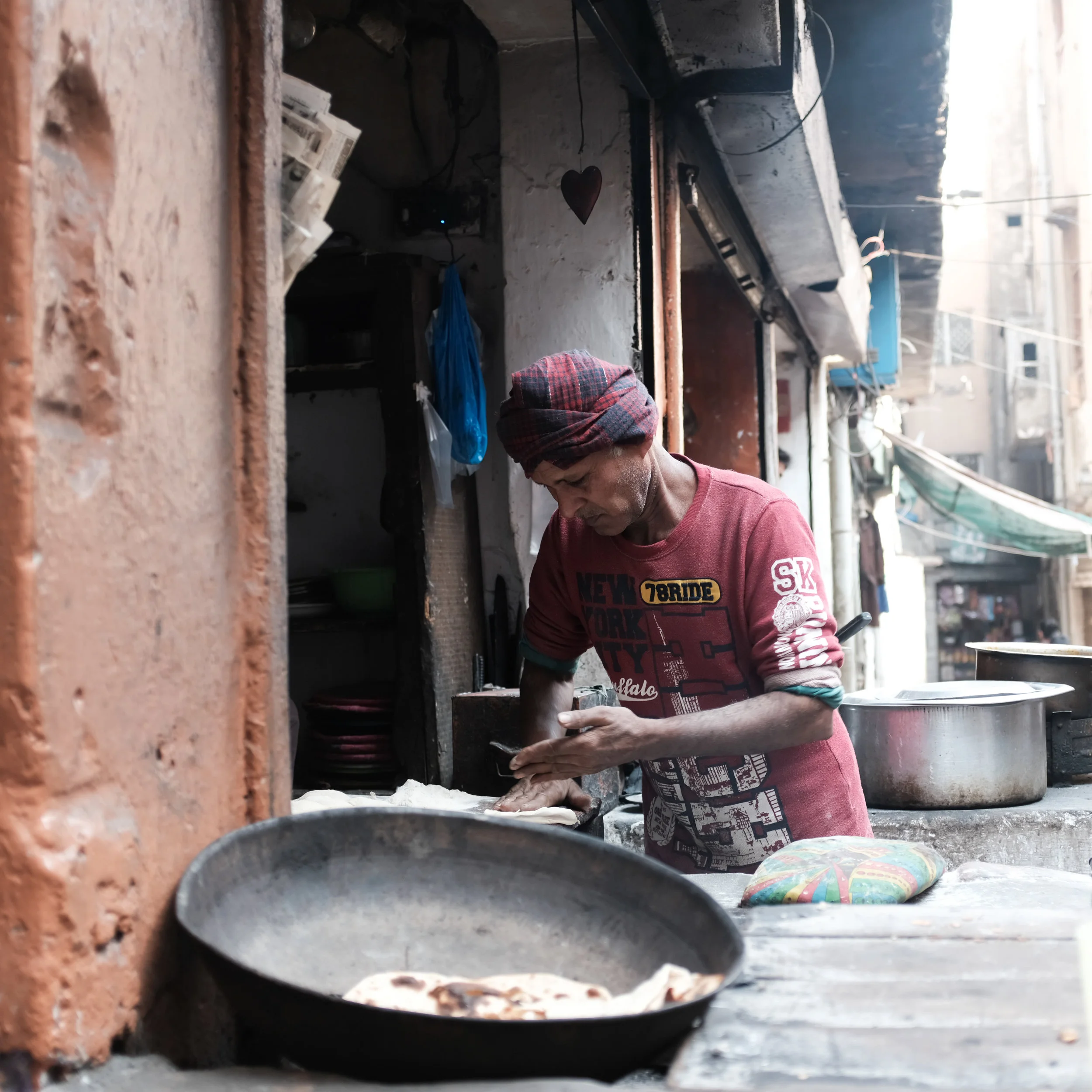
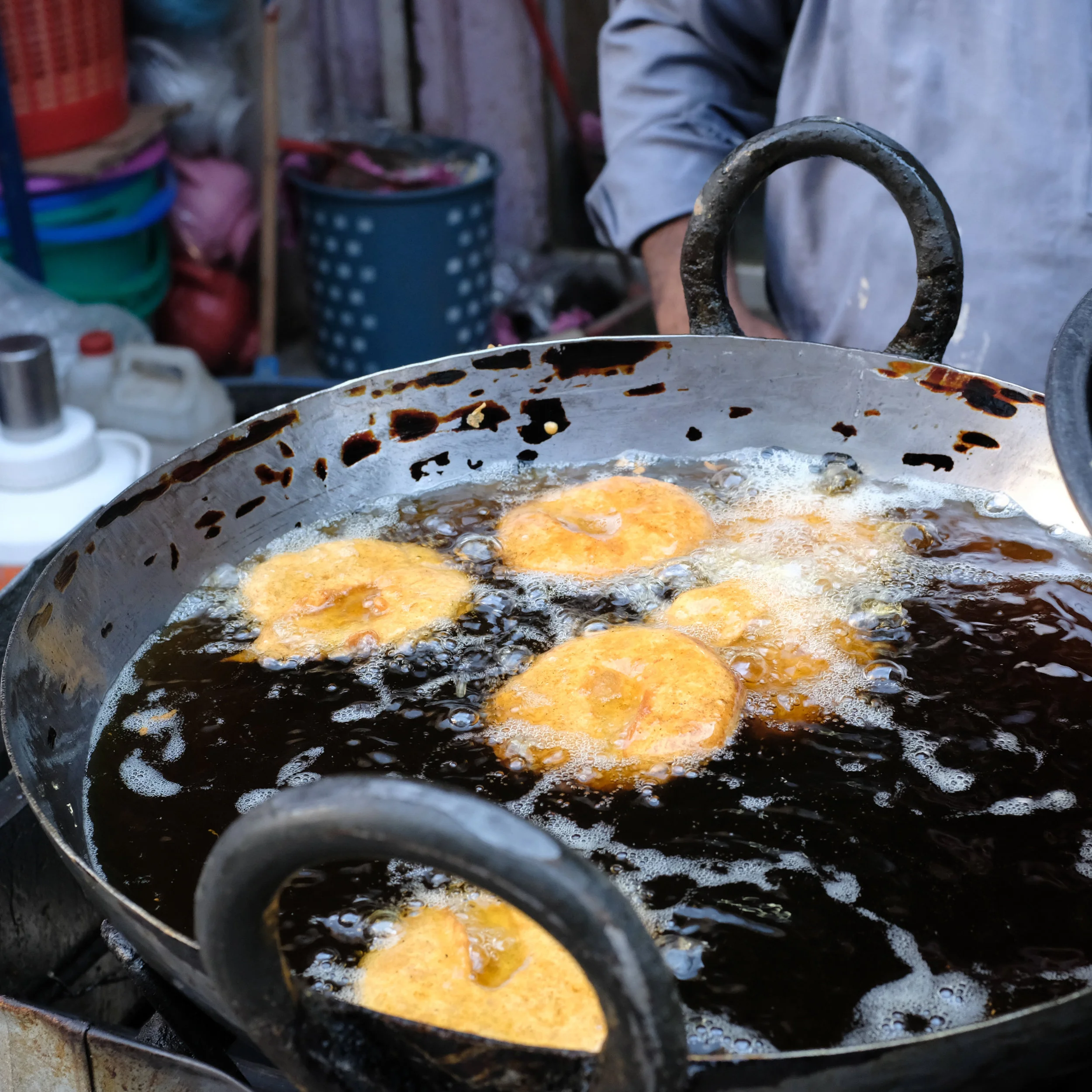
We visited my beloved Lahore, where Saptarshi said he got his first taste of “real Punjab”, thanks to our rental car driver Imran, a fast-talking hustler who became our de facto tour guide. Thanks to Imran, we began our tour with a quick visit to Data Sahib. From there, we went to the magnificent Badshahi Mosque; got lost in the old walled city; stepped inside the quiet but gorgeous Wazir Khan mosque; took a Qingchi and grabbed some greasy mutton karhai doused in oil and black pepper near Anar Kali.
Back in Islamabad, we ate more meals at home than we did out, which is what we wanted. We enjoyed my Qaiser Mamoon’s famous mutton karhai. Always served directly in the wok it was prepared in, we reached over to fight for the richly flavored masala at the bottom of the pan. At home, my special requests included nirgasi koftay – hard-boiled eggs nestled inside sliced, richly flavored koftay (meatballs); aloo paratha (flatbread with potato stuffing) that our home cook, Shehnaz painstakingly prepares by gently pressing spiced potatoes between flattened dough before oiling and heating it on the tawa.
I also ate a ton of goat. Since my father doesn’t eat red meat, my mother was happy to have a partner in crime. Every week, we would have a different variation of goat curry: aloo gosht (goat with potatoes), shaljam gosht (goat with turnips), gobi gosht (goat with cauliflower) and finally, my favorite, palak gosht (goat with spinach).
During my last week, Shehnaz taught me how to prepare this old favorite. She said that I lived too far, otherwise she would pack it in Tupperware and send it with me so I don’t ever have to miss it or worry about preparing it. I told her that this way was better.
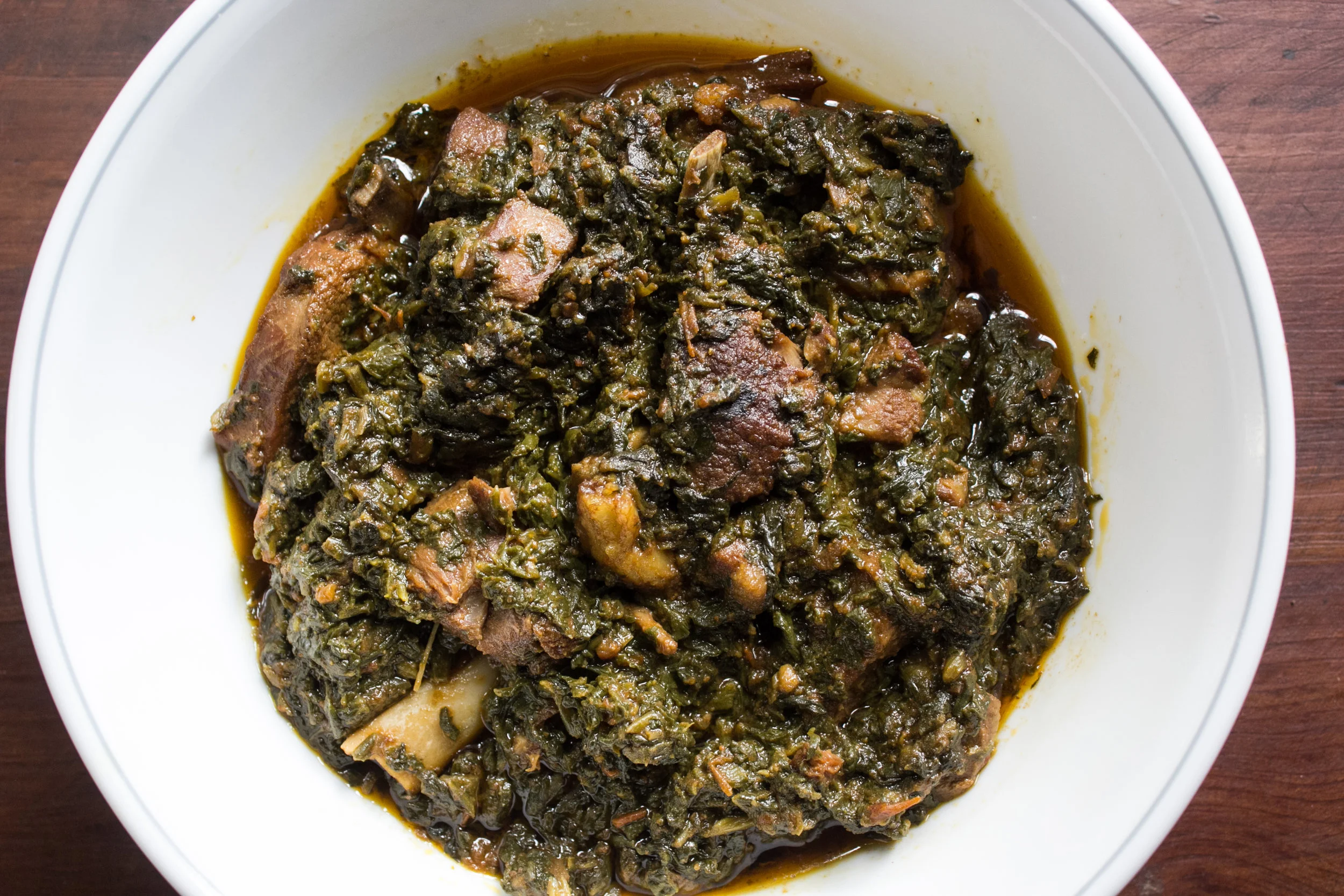
What Is Palak Gosht?
Palak gosht translates directly as spinach meat — palak being the Urdu word for spinach, gosht for meat. In Pakistani cooking, gosht most commonly refers to mutton (goat), though lamb, beef, and chicken are all used. It is a cornerstone of the Punjabi kitchen on both sides of the border, made in homes far more often than restaurants, which is part of what gives it its character — every family’s version is slightly different.
Rather than blending the spinach into a smooth sauce, as in some Indian versions, Pakistani-style palak gosht keeps the spinach in distinct pieces, wilted and folded into a tomato-onion masala. The result is richer, earthier, and considerably more complex than the smooth green curries you might find elsewhere.
Ingredients You’ll Need
Mutton (bone-in): Bone-in mutton shoulder is the best cut for this recipe — the bone adds body to the sauce and the shoulder stays tender without falling apart. If mutton is unavailable, bone-in lamb shoulder is the closest substitute.
Fresh spinach: Use leafy spinach rather than baby spinach — it holds up better in the curry and has a more pronounced flavor. Avoid frozen spinach if possible; it releases too much water and dilutes the masala.
Yellow onion: Quartered and thinly sliced, this is the base of the masala.
Roma tomatoes: Three to four tomatoes, roughly chopped. The equal-parts onion-to-tomato ratio here is important — together they should roughly match the weight of the mutton.
Crushed ginger and garlic: Store-bought works fine. Use equal amounts.
Kashmiri red chili powder: Adds heat and color.
Cumin seeds: Infuses the curry with earthy and nutty notes.
Coriander powder: Adds a warm, citrusy depth.
Turmeric powder: A small amount for color and earthiness.
Bird’s eye chili: Optional but recommended — adds freshness and a sharper heat. If you can’t find bird’s eye chili, use half a serrano pepper.
Oil: Any neutral oil with a high smoke point — canola, sunflower, or vegetable oil.
Salt
Kasuri methi (dried fenugreek leaves): This is optional for adding a slight aromatic finish to the dish.
How to Make Palak Gosht — Step by Step
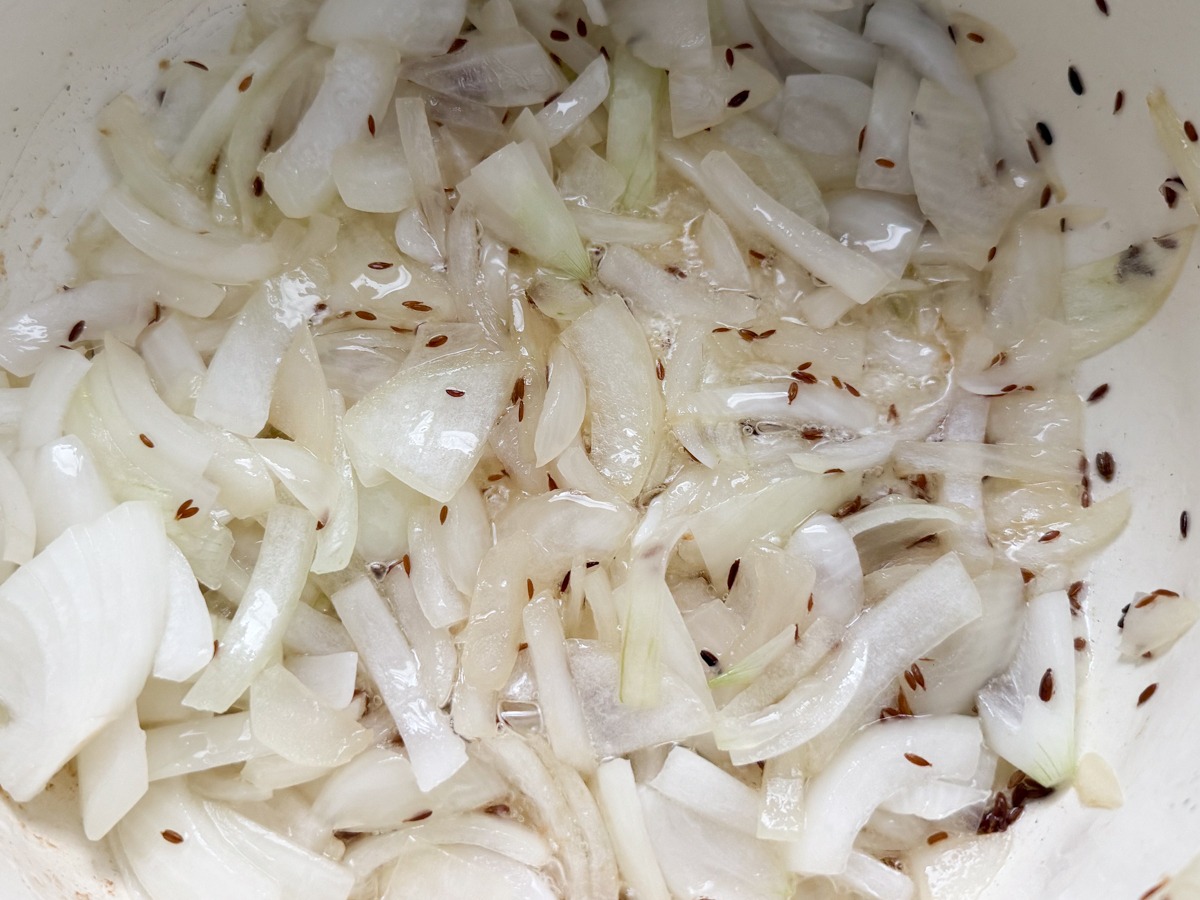
Heat oil over medium-low heat in a heavy bottom pot. When the oil begins to shimmer, add cumin seeds and fry until fragrant. Add chopped onions, and fry on medium-low heat until soft and lightly brown. Add crushed ginger and garlic, and bird’s eye chili. Stir until they no longer smell raw.
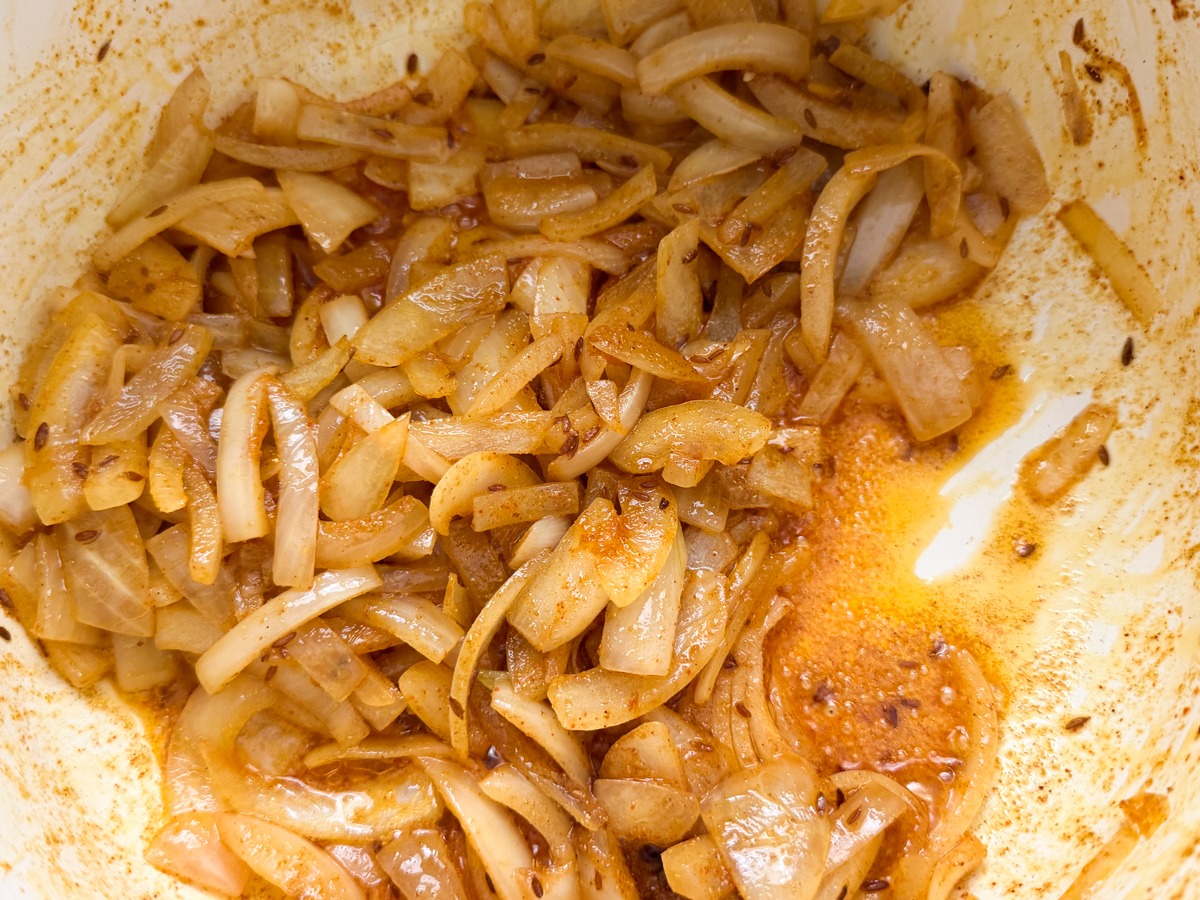
Stir in red chili powder, coriander powder, and turmeric powder, and fry for roughly 1 minute until fragrant. Deglaze the pot with a splash of water if needed.
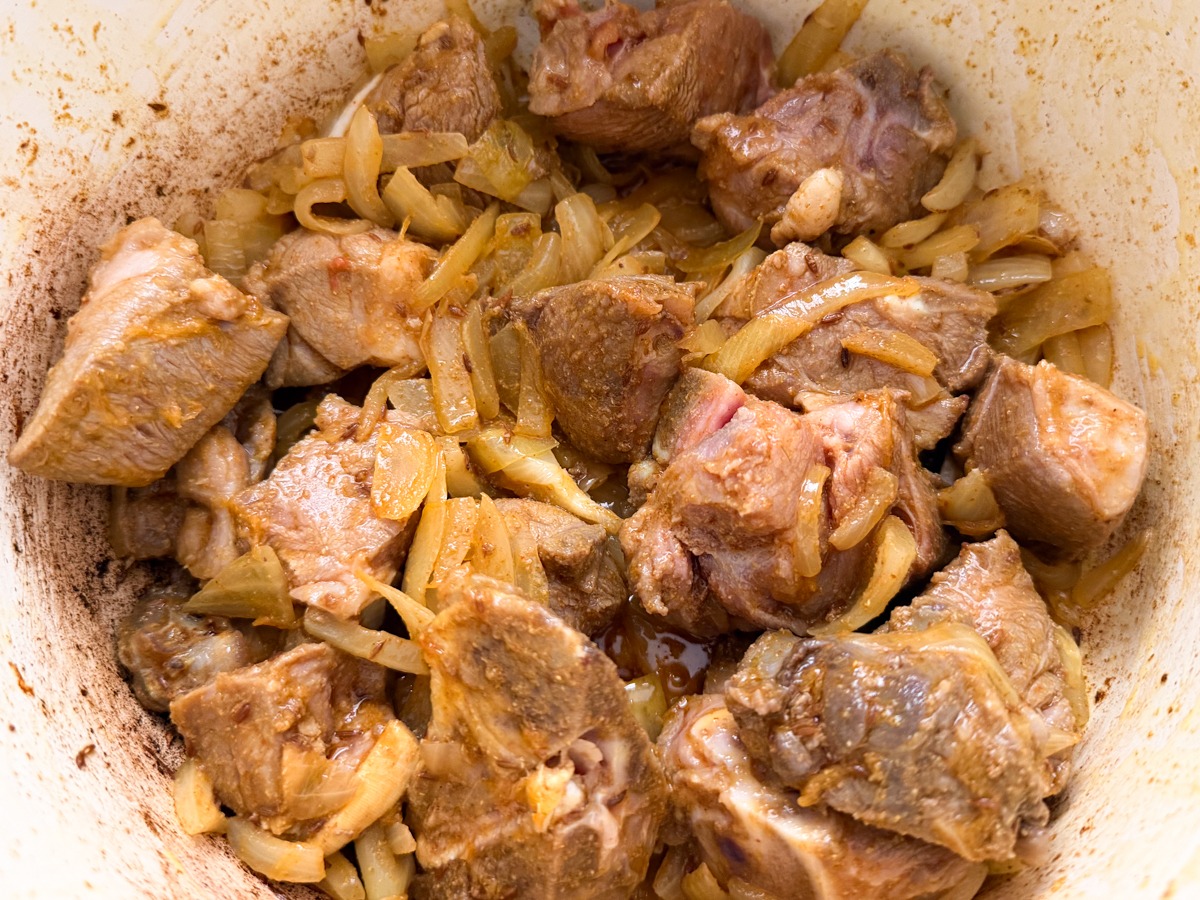
Increase heat to high, and add the mutton. Fry on high heat until no longer pink, and evenly brown.
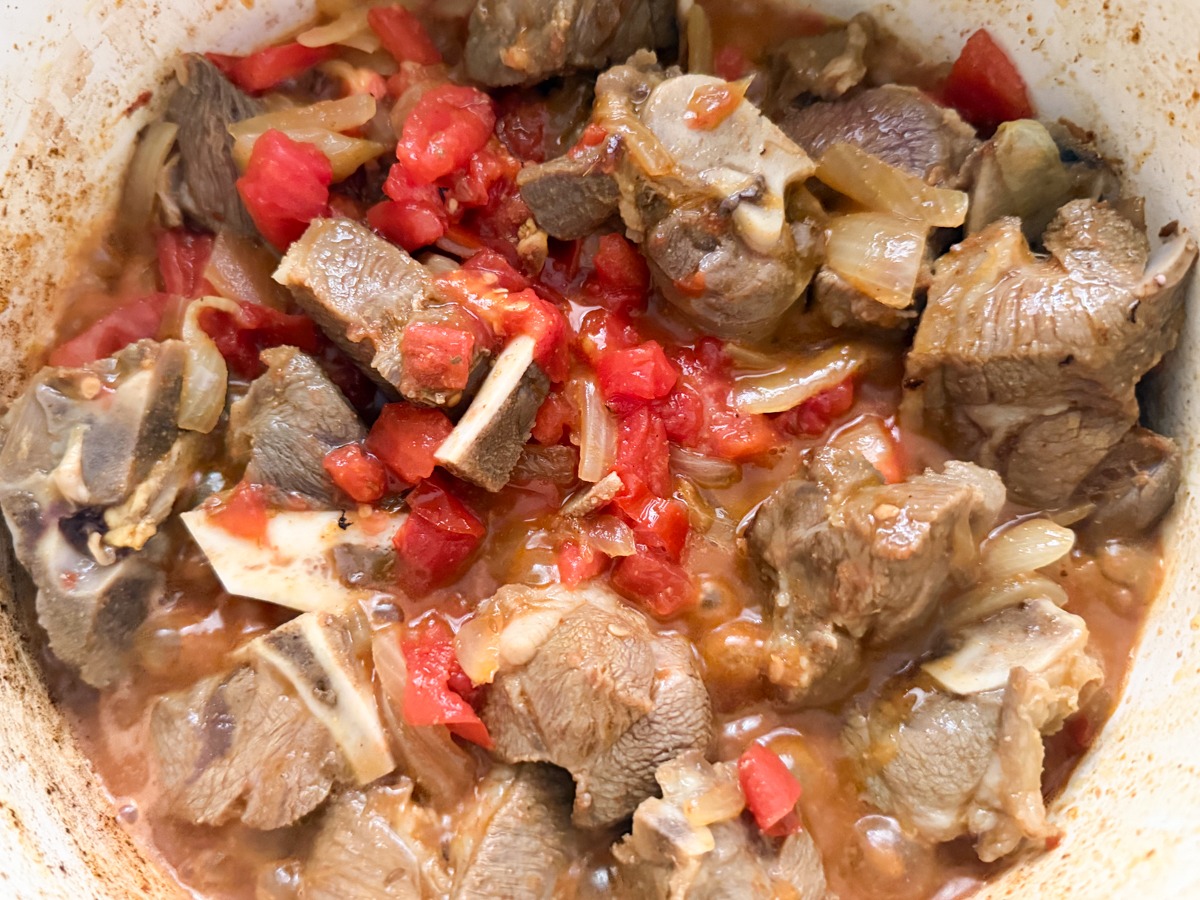
Bring heat to medium, and add diced tomatoes, and the remainder of the salt. Cover, and let the tomatoes soften.
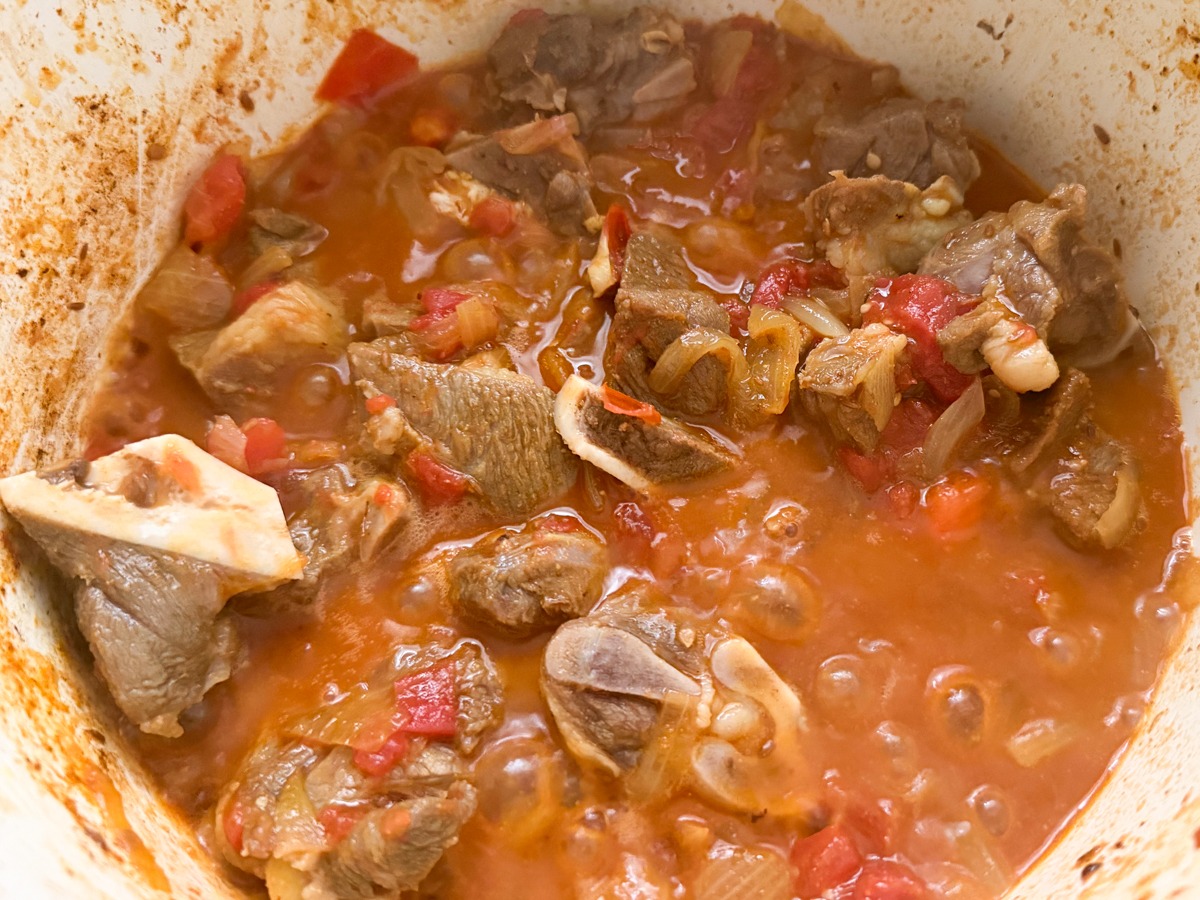
Remove lid, increase heat to medium-high, and fry tomatoes on high heat, stirring frequently, until they begin to soften and break down.
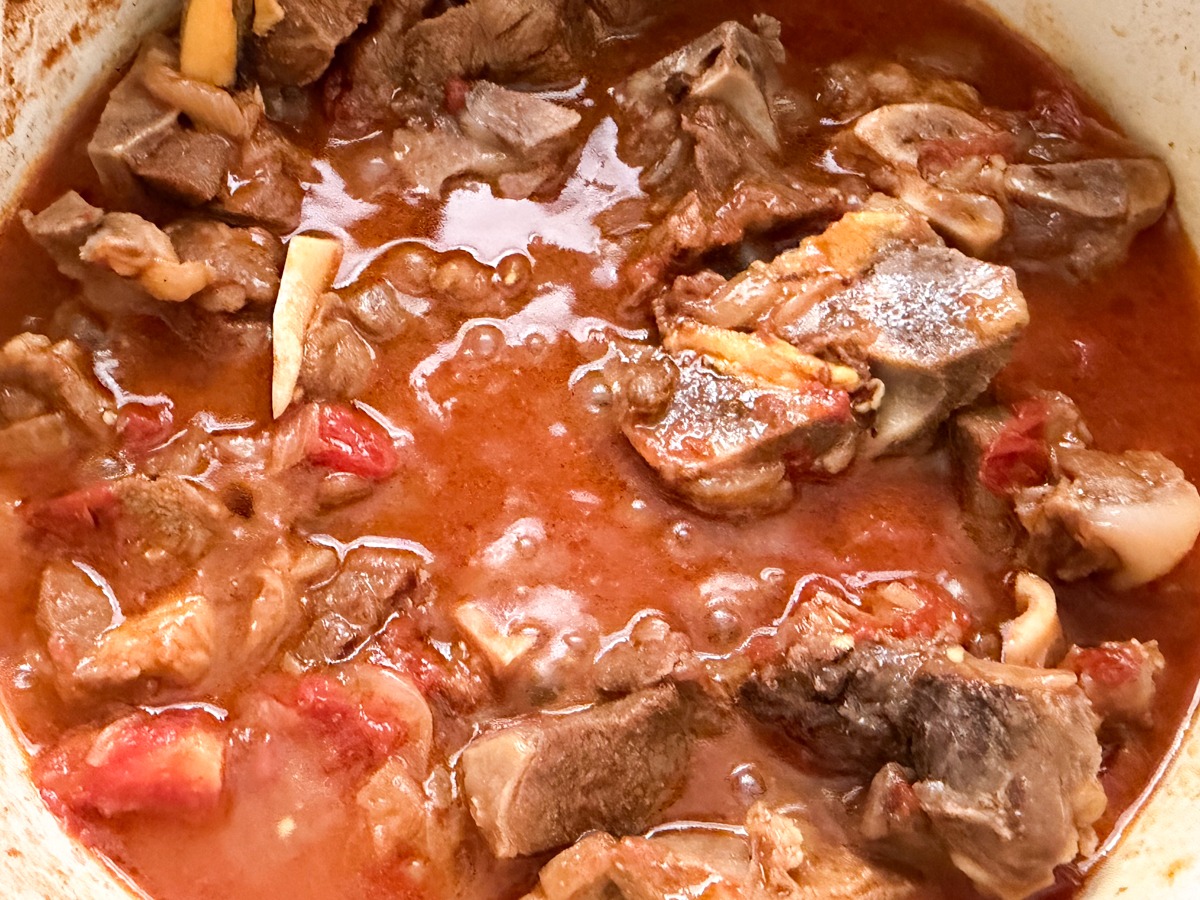
Add enough water to just submerge the meat (exact amount of water will depend on the size of the pot), and cover with a tight fitting lid. Bring to a boil, and lower to a gentle simmer, and let the curry cook on medium-low heat, covered, until meat is fork tender.
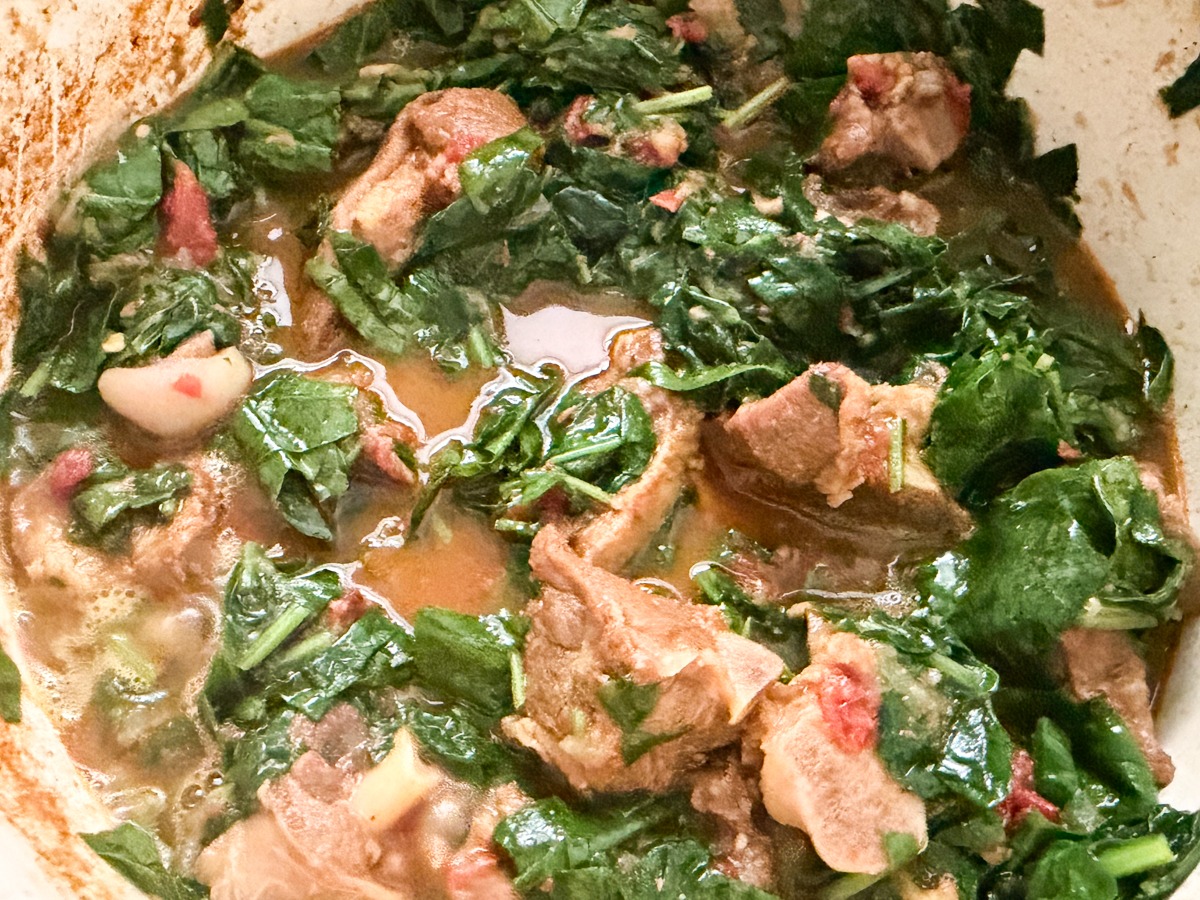
Lift cover, check for salt, and season as needed. Fold in chopped spinach in batches. Partially cover the pot, and let it simmer on low heat for another 20 to 30 minutes, stirring occasionally to make sure it’s not sticking to the pot.
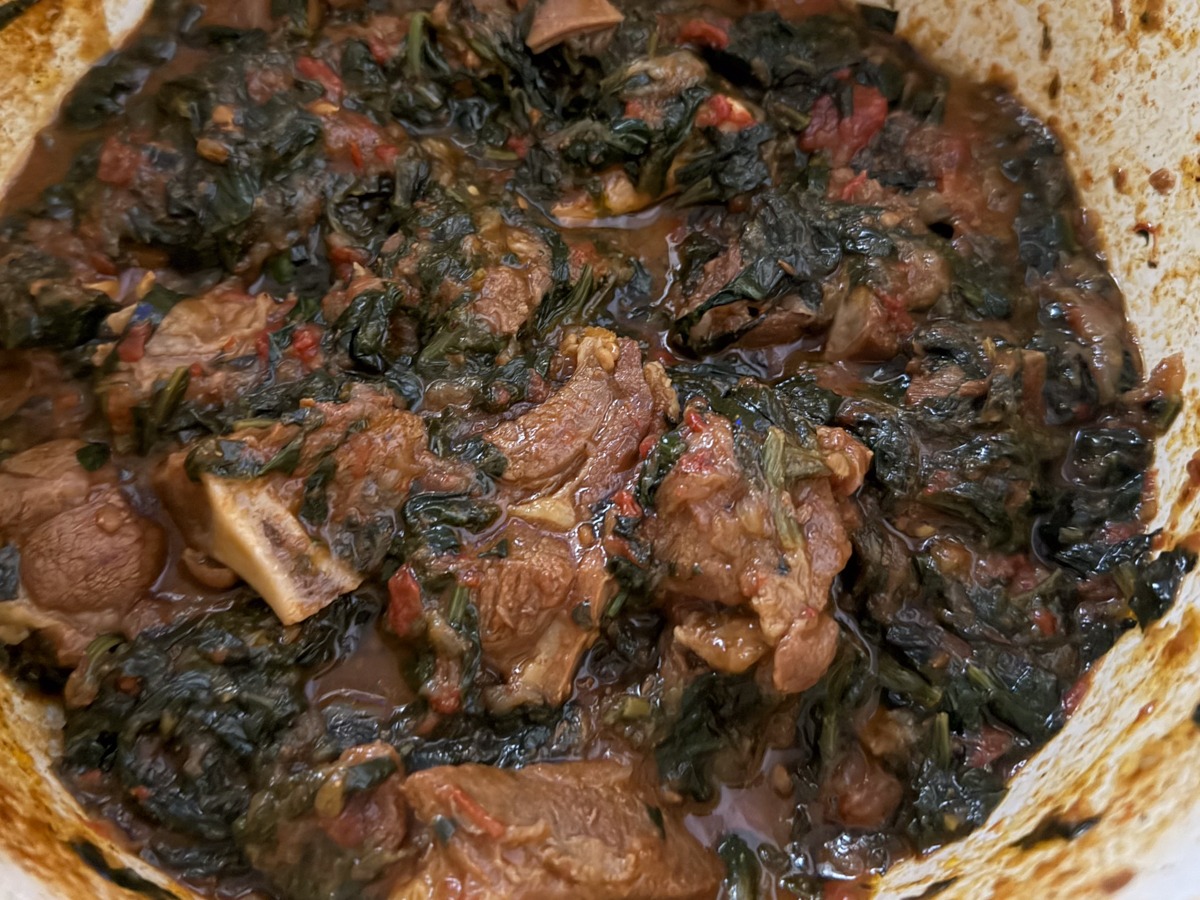
Remove lid, and boil out any excess water, while stirring frequently. Finish with kasuri methi (if using), and let it simmer for a few additional minutes.
Frequently Asked Questions
What cut of mutton works best for palak gosht?
Bone-in shoulder is ideal — the bone enriches the sauce and the shoulder tenderizes beautifully over the long cook time. In Pakistan, butchers typically chop the requested amount into small pieces without specifying the cut; shoulder is Madhur Jaffrey’s recommendation and one I’ve adopted since moving abroad.
Can I substitute beef or lamb for mutton?
Yes. Bone-in lamb shoulder is the closest substitute and uses the same method and timing.
Can I use frozen spinach?
It’s not recommended. Frozen spinach releases a significant amount of water when it thaws, which can dilute the masala considerably. If it’s your only option, thaw it completely in a microwave, then squeeze out as much water as possible before adding it to the curry. One commenter suggests thawing frozen palak in the microwave, squeezing out the water, and adding it at the end — that approach minimizes the wateriness.
How do I know when the mutton is ready?
The mutton should be fork-tender — the meat should pull away from the bone easily. At the recommended simmer time of 1 to 1½ hours, most mutton shoulder will be done, but older or tougher cuts may need longer. Check at the 1-hour mark and add more water if needed.
How much spinach should I use?
Roughly 1 pound is the guideline, but you can use less without significantly affecting the recipe. The spinach wilts down to a fraction of its raw volume, so the amount in the pot will look far more dramatic than what ends up in the finished dish.
Can I make palak gosht ahead of time?
Yes — this curry reheats exceptionally well and many people find it tastes better the next day once the flavors have had time to develop. Store in an airtight container in the refrigerator for up to 3 days, or freeze for up to 1 month.
What do I serve with palak gosht?
Roti or chapati is the traditional pairing — the bread is ideal for scooping up the rich masala. It also works well with plain basmati rice or a vegetarian pulao.
Palak Gosht Recipe (Pakistani Mutton Curry with Spinach)
Palak gosht is a slow-cooked Pakistani mutton curry with spinach, built on a tomato and onion base and finished with tender gosht and fresh leafy palak. Best served with roti or chapati.
Ingredients
Method
Rub 1 teaspoon salt on to the mutton pieces. Set aside.
Heat oil over medium-low heat in a heavy bottom pot. When the oil begins to shimmer, add cumin seeds, and briefly fry until fragrant. Fold in chopped onions, and fry on medium-low heat until soft and lightly brown, about 5 to 7 minutes.
Add crushed ginger and garlic, and bird’s eye chili. Fry for roughly 30 seconds or until they no longer smell raw.
Stir in red chili powder, coriander powder, and turmeric powder, and fry for roughly 1 minute until fragrant. Deglaze the pot with a splash of water if needed.
Increase heat to high, and add the mutton. Fry on high heat until no longer pink, and evenly brown, about 3 to 5 minutes.
Bring heat to medium, and add diced tomatoes, and the remainder ½ teaspoon of the salt. Cover, and let the tomatoes soften for about 5 minutes.
Remove lid, increase heat to medium-high, and fry tomatoes on high heat, stirring frequently, until they begin to soften and break down, about 3 to 4 minutes. Keep stirring until the masala separates from the oil.
Add enough water to just submerge the meat (exact quantity of water will depend on the pot), and cover with a tight fitting lid. Bring to a boil, and lower to a gentle simmer, and let the curry cook on medium-low heat, covered, for 1 to 1 ½ hour, depending on when the meat is fork tender. Stir occasionally, and add hot water ¼ cup at a time as needed to prevent the curry from sticking to the pot.
Lift cover, check for salt, and season as needed. Fold in chopped spinach in batches. Partially cover the pot, and let it simmer on low heat for another 20 to 30 minutes, stirring occasionally to make sure it’s not sticking to the pot.
Check for salt, and adjust as needed. If there is still excess liquid, remove lid and increase heat to high to boil out some of the water while stirring frequently.
Lightly rub kasuri methi with your hands, and fold it in the curry. Let it simmer for a few additional minutes.
Source link