




Britain swelters in record-breaking June heat
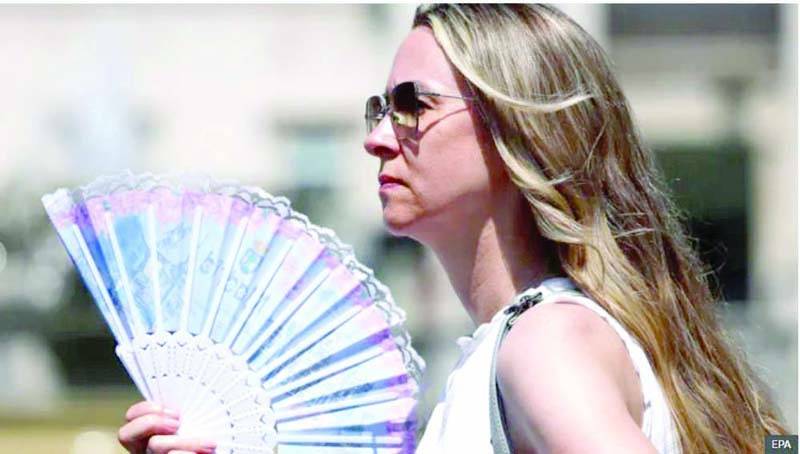
LONDON – The UK experienced its hottest June day on record on Thursday as temperatures hit 36.4C in Somerset. It marked the second time this week the record was broken after temperatures reached 36.1C in Hampshire on Wednesday. As extreme temperatures continue to grip the country, hundreds of schools have been forced to close early, while transport has faced significant disruption, with train passengers advised to avoid all non-essential travel. With a rare red weather warning in place until Friday for the south of England, people across the UK are trying to cope with the heat in different ways. While many people have been enjoying the warm weather, the Met Office has warned it could result in “population-wide adverse health effects”, leading to serious illness or even danger to life. Doctors are reporting increased pressure and difficult conditions in hospitals, according the Royal College of Physicians. The college added there are numerous reports of older patients being brought in after collapsing because of dehydration and said its members have linked the extreme heat to causing machines and equipment to malfunction. Commuters faced long delays on Wednesday evening as public transport struggled to deal with the heat. Train operators including South Western Railway, Thameslink, Northern and Avanti West Coast have asked people to make essential journeys only and have put reduced timetables in place. Transport for London warned passengers that “very high temperatures” might cause disruption to some Tube and rail services. Much of the UK is facing a record-breaking heatwave, with temperatures potentially reaching 37C or higher in parts of southern England.
That would smash the previous June high and comes hot on the heels of unprecedented heat in May too. But scientists are warning even hotter temperatures are likely in the years ahead. They have described the records as “extraordinary” and say the UK needs to make preparations for more extreme heat a much greater priority. The temperatures we are experiencing are particularly unusual so early in the summer, but they are consistent with how our climate is changing. “We expect increasing temperatures and the breaking of temperature records due to climate change,” said Lizzie Kendon, professor of climate science at the University of Bristol and head of climate projections at the UK Met Office.
“What is so extraordinary, however, is the margin by which the record will be broken.” While temperatures vary naturally from year to year, UK summers have clearly been getting warmer.
Between 2015 and 2024, the number of days exceeding 30C in the UK more than trebled compared with the 1961-1990 average, the Met Office says. The maximum temperature recorded each year has shot up too. Reaching 35C was a rare event throughout the 20th Century – but six out of the past 10 years have passed that mark. The UK’s hottest recorded temperature now stands at 40.3C, set in July 2022. Before 1990, the UK had not seen 37C. But these records are almost certainly going to keep getting broken.
If global warming continues at its current pace, temperatures in the mid-forties could be a serious possibility for the UK by 2050, according to Met Office projections.
And while not every year will be hotter than the last, the UK could face even higher temperatures in the second half of this century. Higher temperatures driven by climate change dry out the soil too. With less moisture available, less heat energy is used for evaporation – leaving more energy to warm the air and amplifying the hot conditions.
Some scientists have also argued that climate change could be making high-pressure systems more likely to get “stuck” – although this is not yet certain.
This can create a “heat dome” that traps hot air underneath, which is what Europe has been experiencing this week.
“Climate change [is] loading the atmosphere with extra heat and making extreme temperatures far more intense than they would have been in the past,” said Dr Akshay Deoras, senior research scientist at the University of Reading.
Scientists stress that the only way to limit rising summer temperatures is to rapidly cut global emissions of planet-warming gases, such as carbon dioxide.