




Bridging the future of television hosting and digital journalism
Television hosting has always demanded more than a confident on-screen presence. It requires credibility, subject understanding, adaptability and the ability to lead a conversation while events continue to shift in real time.
In Pakistan’s fast-moving media environment, where political, social and public-interest stories can change within hours, those qualities still matter because they shape how seriously audiences take both the presenter and the programme.
Digital media has widened that responsibility rather than replacing it. Audiences no longer rely only on scheduled bulletins or evening shows. They move between clips, live streams, interviews, digital segments and online discussions throughout the day. That shift has not reduced the value of television. It has instead increased the importance of journalists who can work across both formats without losing the seriousness, clarity and judgment that broadcast media still demands.
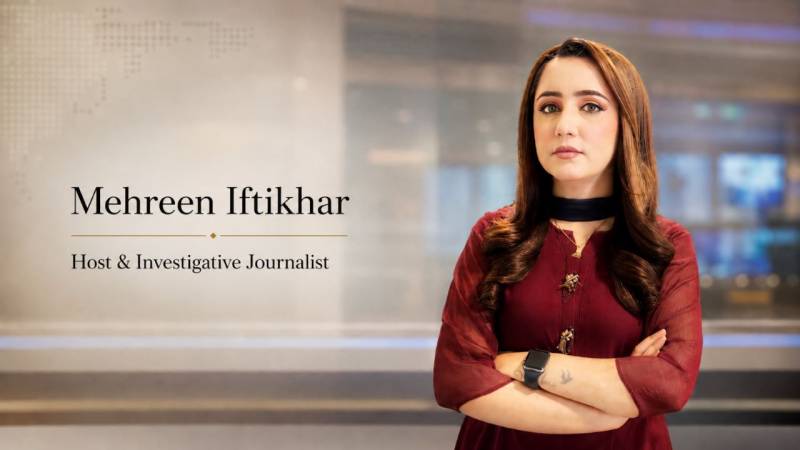
Within that changing media landscape, Mehreen Iftikhar has shaped a career at the meeting point of television presentation and digital political journalism. Based in Lahore, she works as a Broadcast Journalist, presenter and Investigative Journalist, with experience in programme hosting, live and recorded news presentation, political coverage and newsroom coordination. At the centre of that work is a clear motivation: to get closer to the real story and present public affairs with clarity and authenticity. Her work reflects a media environment in which a presenter is expected not only to deliver information, but also to understand how different formats shape the way audiences receive it.
For Mehreen, the issue is not whether television matters more than digital media, or the other way around. The more important question is how a journalist carries the strengths of one format into the other. The qualities that define strong programme hosting, command over the subject, composure on screen, listening skills and the ability to guide discussion, remain just as important when the conversation moves to digital platforms, where attention is shorter and competition for viewers is constant.
Across her broadcast work, Mehreen Iftikhar has hosted current-affairs programmes and worked as a news anchor on channels including ARY News, 92 News and 24 News. That work placed her in newsroom settings where timing, clarity and pressure handling matters every day. Live bulletins demand control, while programme hosting adds another layer: the ability to keep a discussion coherent, ask sharp questions and give shape to issues that can often be politically sensitive or fast-moving. She has also covered the U.S. and U.K. elections, adding an international dimension to her experience in political and current-affairs journalism.
The digital side of her work has given that experience to another outlet. Through her YouTube programme, The Deep View with Mehreen Iftikhar, she continues political discussions in a format that allows more room for interviews, commentary and issue-based conversation. During her career, she has also interviewed multiple international journalists and international personalities alongside Pakistani political figures. In that format, the pace may be different from television, but the core demands remain familiar: preparation, clarity, editorial sense and the ability to keep a discussion useful for viewers.
That balance does not come automatically. Digital platforms reward speed and reach, but serious journalism still depends on tone, structure and restraint. For Mehreen, maintaining a digital presence means adjusting to a different viewing habit without treating online journalism as a lighter version of broadcast work. That is where her role as a Broadcast Journalist and Investigative Journalist continues to matter, because it brings discipline to a digital environment that can easily drift toward noise, reaction and exaggeration.
As Pakistan’s media landscape continues to change, the relationship between television hosting and digital journalism is becoming less about replacement and more about range. The stronger direction is not to abandon one for the other, but to carry the credibility of broadcast media into newer formats where audiences now spend their time. That is the broader shift this conversation points to, and it is also where Mehreen Iftikhar’s work fits most naturally: within a media culture that increasingly values the bridge between television presence and digital journalism.