





Telecom Industry Urges Govt to Drastically Slash Fiber & Mobile Taxes, Cut 5G Duties in Budget 2026-27
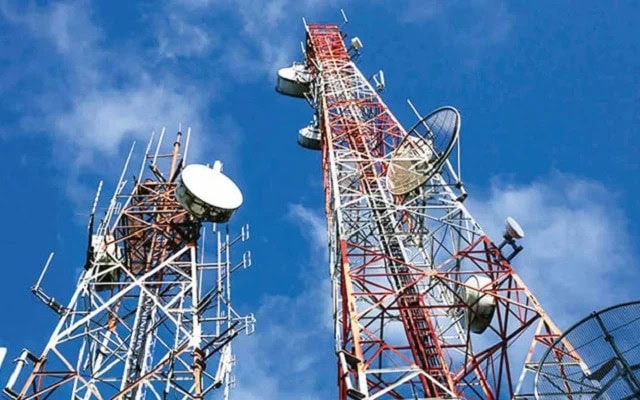
Telecom operators have formally submitted five major budget proposals to the Ministry of Information Technology and Telecommunication, seeking significant reductions in industry taxes and import duties.
The requests were submitted through the Telecom Operators Association ahead of the federal budget for the fiscal year 2026–27, covering taxation, import duties, and regulatory reform.
Operators argue that high taxation, rising operational costs, and currency depreciation are placing severe financial pressure on the sector and limiting its ability to expand network infrastructure.
Withholding tax and income tax proposals
The industry has asked the government to reduce withholding tax under Section 153 of the Income Tax Ordinance from the current six percent to four percent for telecom operators.
The association also wants the tax made adjustable rather than treated as a minimum tax, which it says creates significant cash flow constraints and raises the overall cost of capital.
Operators are additionally requesting that the carry-forward period for turnover tax credits under Section 113 be extended from two years to five years.
Consumer tax on mobile usage
The industry is calling for a reduction in advance income tax on telecom services under Section 236 from the current fifteen percent down to eight percent for all consumers.
Operators say the existing rate disproportionately affects low-income and prepaid users, suppressing digital adoption and restricting access to basic mobile and internet services.
The association notes that the tax had previously been reduced under an Economic Coordination Committee decision before being raised again through the Supplementary Finance Act of 2021.
5G equipment and customs duties
Telecom firms are requesting a full abolition of customs duties on imported 5G and fixed-line equipment, including network infrastructure, smartphones, servers, batteries, and SIM cards.
Operators estimate that removing these import duties could unlock approximately PKR 12 billion in additional capital available for network expansion and broader digital infrastructure deployment.
The industry says high import costs have slowed the rollout of next-generation connectivity technologies, particularly in rural and underserved regions across the country.
Optic fibre duties and regulatory reform
The operators are seeking a reduction in combined duties and taxes on optic fibre cable imports from approximately sixty-seven percent to just five percent of the import value.
They state that high fibre costs, alongside global supply shortages and elevated freight charges, have become a major bottleneck for broadband expansion across Pakistan.
On regulatory matters, the industry is recommending that the Commissioner’s authority under Section 147(6B) to reject taxpayers’ advance tax estimates be formally withdrawn by the government.
The association argues that this power increases business disputes, adds litigation costs, and creates significant uncertainty for investors and operators conducting long-term planning.
Connectivity gaps and sector data
| Indicator | Value | Context |
|---|---|---|
| Population without 4G | 30%+ | Large segment remains uncovered by modern mobile broadband services |
| Lacking mobile signal | 12% | Citizens without access to even basic mobile connectivity |
| Fixed broadband penetration | Among the lowest globally, limiting digital inclusion | |
| Consumer telecom tax rate | 34.5% | One of the highest regional consumer taxation levels |
More than thirty percent of Pakistan’s population currently remains outside the coverage area of 4G mobile broadband services, according to figures cited in the industry proposal.
Approximately twelve percent of the population still lacks access to any basic mobile signal, while fixed broadband penetration across the country remains below two percent.
Pakistan’s consumer taxation on telecom services stands at 34.5 percent, which the industry describes as among the highest levels recorded across comparable regional markets.
The proposal also cites research suggesting that a ten percent increase in broadband penetration can raise a country’s GDP per capita by approximately two percent over time.
The telecom association maintains that reducing the financial burden on operators and consumers would support digital inclusion, broadband expansion, and wider national economic development.